

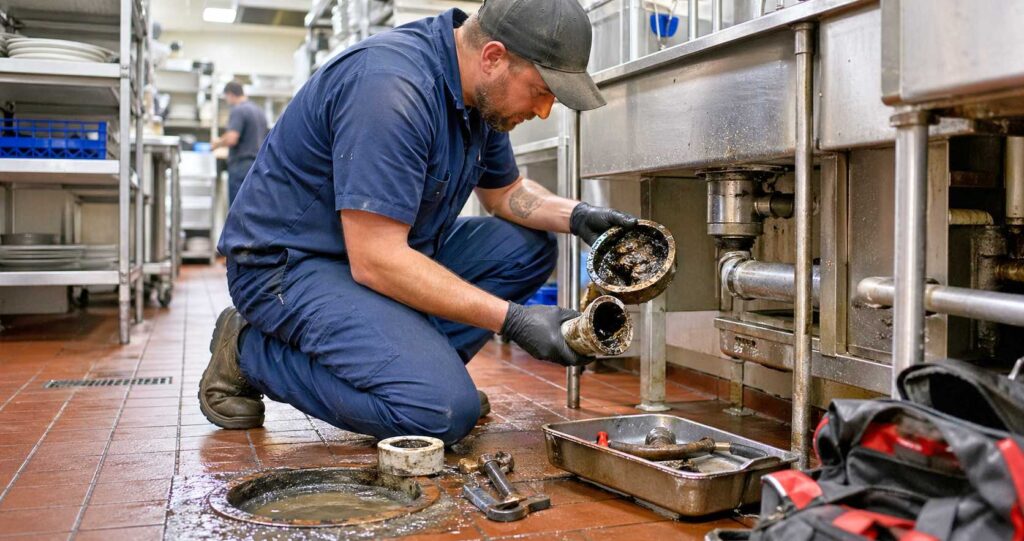
Impact of Biofilm On Your Three Bay Sink Drains
Biofilm is one of those hidden problems in a commercial kitchen that cause much bigger issues than many operators realize. When food waste, grease, and organic residue keep entering your drains, they create the perfect environment for buildup that affects sanitation, plumbing performance, and day-to-day kitchen operations.
-
- Biofilm is a sticky buildup of bacteria, grease, food particles, and organic matter that clings to the inside of drains and pipes.
- Commercial kitchens are especially vulnerable because of the constant presence of moisture, food waste, grease, and warm conditions.
- As biofilm builds up, it causes foul odors, slow drains, recurring clogs, drain flies, and strain on your plumbing.
- Warning signs of biofilm include lingering drain odors, slimy residue, repeated backups, slow drainage, and recurring pest issues around wet areas.
- Removing biofilm takes more than basic cleaning, especially once buildup has had time to develop inside the plumbing.
- Long-term prevention is important, because biofilm keeps coming back unless the root causes are addressed.
- Keeping food solids out of your three bay sink drains is one of the best ways to reduce the conditions that allow biofilm to form and grow.
- The Drain Strainer helps prevent biofilm by intercepting food waste before it enters the plumbing system and contributes to buildup.
Let’s take a closer look at each of these main points in more detail.
The Impact of Biofilm on Your Three Bay Sink Drains
In a busy commercial kitchen, some of the most frustrating problems start out hidden inside your plumbing system, where they can quietly build up until they start affecting your sanitation, efficiency, and day-to-day operations.
One of the biggest hidden troublemakers is biofilm. In a busy commercial kitchen, biofilm has everything it needs to thrive.
There’s moisture, warmth, grease, food residue, soap, and a constant flow of organic material moving through the three bay sink drains.
Once it starts forming, biofilm creates odors, slow drains, attracts pests, and contributes to recurring plumbing headaches.
For commercial kitchen owners and operators, understanding how to eliminate biofilm is important not just for solving existing drain problems, but for preventing them in the first place.
What Is Biofilm A Big Headache In Your Commercial Kitchen?
Biofilm is a sticky layer of organic buildup that clings to the inside of drains, pipes, and other wet surfaces.
It is made up of bacteria, grease, food particles, soap residue, and other debris that attach to a surface and begin to multiply.
Instead of washing away easily, it sticks to the inner walls of your plumbing and creates a slimy coating that keeps getting thicker over time.
Biofilm is not just a harmless layer of grime. It traps more and more debris as waste continues to flow through the drain system.
That means the longer it is ignored, the more opportunity it has to turn into a bigger problem.
What starts out as a thin layer can eventually become a source of odors, blockages, sanitation concerns, and repeated maintenance issues.
Commercial Kitchens Are Vulnerable to Biofilm
Commercial kitchens are one of the easiest places for biofilm to develop because they create the exact conditions that allow it to flourish.
Throughout the day, three bay sink drains are exposed to food scraps, grease, starches, sugars, dairy residue, sauces, oils, and wash water.
Even commercial kitchens that do a great job of cleaning all their visible walls and countertops are still be sending a steady stream of organic material into their plumbing system.
The pace of a busy commercial kitchen makes the problem worse.
During a busy lunch or dinner shift, staff members are focused on speed and efficiency.
When food solids and waste are regularly rinsed toward the drain, your plumbing starts becoming a collection point for material that should have been stopped earlier.
Over time, all that waste starts sticking to the inside of your plumbing system and helps biofilm start growing layer by layer.
Food Waste Contributes to Biofilm Growth
Food waste is one of the biggest contributors to biofilm in a commercial kitchen.
Tiny particles of food from washing dishes seem harmless in the moment, but they do not simply disappear.
Many of those food particles settle inside your plumbing, combine with grease and soap residue, and create a sticky surface where bacteria and organic matter can collect.
This is one of the main reasons biofilm can become such a persistent issue in kitchens with heavy dishwashing activity, prep sink use, and floor drain exposure.
The more food waste that enters your three bay sink drain system, the more fuel there is for buildup.
It is a gradual process, which is why many operators do not realize how serious it has become until they start dealing with foul smells, slow drains, or recurring service calls.
Problems Biofilm Can Cause in Your Commercial Kitchen
One of the first things many kitchen operators notice are foul odors.
Biofilm can create strong, unpleasant smells that seem to linger around sinks, floor drains, and dish areas no matter how much surface cleaning is done.
That is because the odor is not always coming from what is visible on top. It is often coming from the organic buildup inside the three bay sink drain itself.
Biofilm can also affect how drains perform. As buildup thickens inside pipes, it can narrow the flow path for water and waste.
That may lead to slow drains, standing water, or repeated clogs that seem to keep coming back.
In a commercial kitchen, even a minor drainage issue can quickly turn into a major bottleneck during a busy rush.
Another common issue is pest activity, especially drain flies.
Biofilm creates the kind of damp, organic environment that drain flies love.
If staff members are noticing small flies around sinks, mop areas, or floor drains, there is a good chance that biofilm is part of the problem.
In addition to being unpleasant, this can raise sanitation concerns and create a negative impression on employees, health inspectors, and customers.
Biofilm can also put more strain on other parts of the kitchen’s plumbing system.
As food waste and organic residue accumulate, they can contribute to grease trap issues, backups, and more frequent plumbing maintenance.
Over time, what seems like a minor housekeeping problem can become a costly disruption that affects labor, scheduling, and kitchen efficiency.
Warning Signs That Biofilm May Be Building Up
Many commercial kitchen drain problems don’t appear overnight.
Biofilm usually develops gradually over time, and the warning signs may seem small at first.
A drain might start to smell a little worse than usual. Water might take a little longer to clear.
Staff might start noticing slimy residue around drain openings or recurring fruit fly or drain fly activity near wet areas.
These are all signs that something deeper may be happening inside your plumbing.
If the same drains seem to need frequent attention, if odors return quickly after cleaning, or if minor clogs keep happening in the same areas, biofilm should be considered as a likely cause.
Commercial kitchens that ignore these warning signs often end up dealing with bigger and more expensive drain problems later.
How Biofilm Gets Removed
Once biofilm has become a serious issue, it takes more than a basic rinse or surface cleaner to solve it.
Depending on the severity of the buildup, you will likely need professional drain cleaning, mechanical cleaning methods, targeted drain treatments, grease trap service, or a more thorough plumbing evaluation.
The right solution depends on the location of the buildup, the condition of the plumbing, and how long the problem has been developing.
The important thing for operators to understand is that biofilm is stubborn.
Because it sticks to the inside of your plumbing, it is not always easy to remove with simple cleaning alone.
Even when it is removed, your kitchen needs to change the conditions that allowed it to build up.
Otherwise, the problems will eventually come back.
Why Biofilm Keeps Coming Back
One of the most frustrating things about biofilm is that it often returns.
That’s because most commercial kitchens end up treating the symptom without solving the root cause.
A drain may be cleaned, deodorized, or temporarily opened up, but if the food solids and organic waste continue entering their plumbing day after day, the buildup cycle begins again.
That is why biofilm prevention has to go beyond occasional cleaning. Your commercial kitchen needs a more complete strategy.
It is not enough to wait to react when odors or slow drains become obvious.
Operators need to prevent the conditions that allow biofilm to thrive in the first place.
That starts with taking a closer look at what is going down your three bay sink drains every day.
Why Biofilm Prevention Is So Important
For biofilm, prevention is more practical than the cycle of constant cleanup.
Repeated plumbing calls, emergency drain problems, and persistent odors cost time and money.
They also create unnecessary stress for staff and can disrupt kitchen operations at the worst possible times.
Preventing the buildup of biofilm is not just about cleanliness.
It is about protecting workflow, reducing maintenance issues, and keeping your kitchen running more smoothly.
The best prevention strategy is to stop as much food waste and organic debris as possible before it ever enters the plumbing system.
When less food solids go down the drain, there is less material available to cling to pipe walls, feed bacterial growth, and contribute to biofilm buildup.
That makes your entire drain system easier to manage over time.
The Drain Strainer Helps Reduce Biofilm Problems
One of the most effective ways to reduce biofilm problems is to keep food solids out of the three bay sink drains in the first place.
The Drain Strainer helps commercial kitchens do that by intercepting food waste before it can move into the plumbing system and start contributing to buildup.
Instead of allowing food scraps and solids to wash into your plumbing, The Drain Strainer helps capture the food debris while still allowing your three bay sinks to drain quickly.
This plays a major role in reducing the amount of organic material that fuels biofilm growth.
It can also help reduce drain odors, limit recurring buildup, ease strain on the plumbing system, and support a cleaner, more efficient dish area.
For commercial kitchens that are tired of fighting the same drain-related issues over and over, this is a smarter long-term approach.
Rather than waiting for food waste to become a plumbing problem, The Drain Strainer helps stop that cycle.
Best Practices for Reducing Biofilm in Commercial Kitchens
Biofilm prevention works best when it becomes part of the kitchen’s daily operating mindset.
Staff should be trained to keep food solids out of three bay sink drains as much as possible by scraping plates before bringing them back to the dish room and recognizing that drains are not a disposal solution for kitchen waste.
Regular cleaning around sinks and floor drains is important, but it should be paired with better upstream waste control.
Operators should also pay attention to warning signs and avoid dismissing recurring odors or slow drains as normal.
Small issues often point to deeper buildup inside the system.
When problems are caught early, they are easier and less expensive to address.
Consistent grease trap maintenance, good cleaning practices, and a solid separator helps keep solids out of your plumbing can all work together to reduce the likelihood of biofilm taking hold.
Avoid Biofilm In Your Three Bay Sinks With Our Solid Separator
If you want to keep your prep sinks from getting clogged with food solids, The Drain Strainer™ solid separator captures food debris that either can be disposed of or kept for composting.
The Drain Strainer™ can help you avoid issues with what gets put down your three bay sinks. No matter how much you focus on employee training, short cuts are always going to be taken and items are going to be put down your commercial disposal unit that can harm it.
If a utensil accidentally goes down The Drain Strainer™, it simply ends up in your strainer drawer and can be easily retrieved without any damage.
Biofilm may be out of sight, but its impact on your commercial kitchen can be very real.
It contributes to odors, slow drains, pest activity, sanitation concerns, and repeated plumbing frustrations that interfere with the daily flow of your business.
Because it builds gradually inside the plumbing system, it’s easy to overlook until the problems become too big to ignore.
Commercial kitchen owners and operators should reduce the conditions that allow these problems to develop in the first place.
Keeping food waste out your three bay sink drains is one of the simplest and smartest ways to do that.
If you want to reduce the buildup that leads to biofilm, protect your plumbing, and create a more efficient drain management system in your kitchen, The Drain Strainer is a great place to start.
The more food solids you keep out of your drains, the fewer biofilm-related headaches you will have to deal with.
If you want to avoid issues with clogged grease traps or foodservice disposers that are leaking or have burned out motors, The Drain Strainer™ solid separator is an effective and affordable commercial kitchen waste disposal system alternative that doesn’t require the use of water or electricity.
Invented by a former restaurant owner, The Drain Strainer™ can eliminate issues with mangled silverware or dangers from employees putting their hands down the commercial waste disposal unit trying to clear out a clog.
Click here to find out more about how our foodservice disposer alternative can keep your grease trap free from clogs.
Let The Drain Strainer™ keep your three bay sinks running smoothly by capturing food solids and avoiding any problems with your commercial kitchen floor drains.