

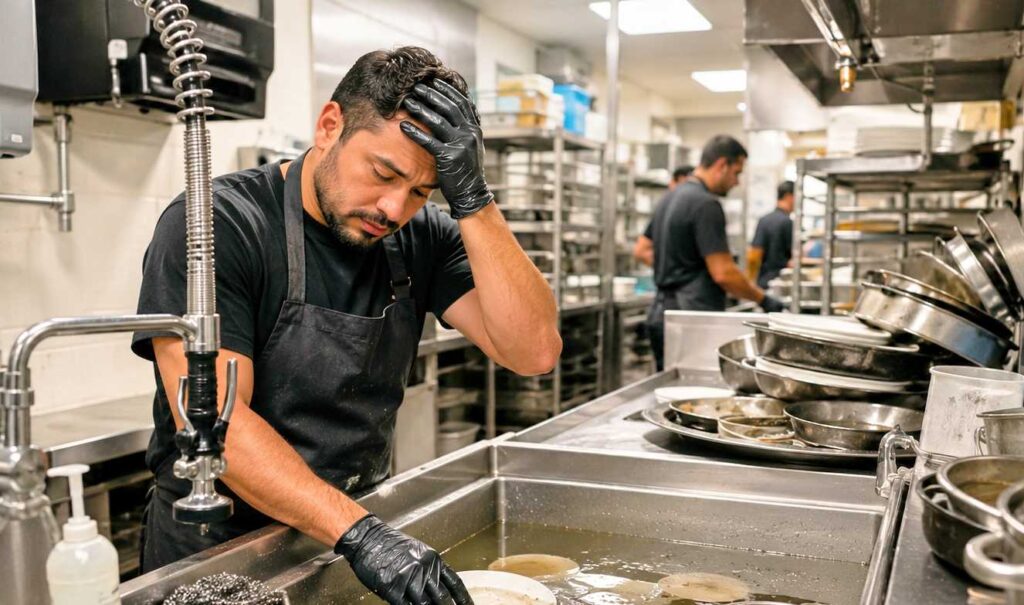
Prevent Dish Room Bottlenecks With Our Scrap Collector System
In a busy commercial kitchen, drain problems often start long before closing time. The Scrape–Sort–Soak approach to dishwashing and a Drain Strainer scrap collector system can help staff keep food solids out of the sink, reduce plumbing issues, and prevent stressful end-of-night backups.
-
- End-of-night backups often result from food scraps that are missed, rinsed away, or pushed toward the drain during a busy lunch or dinner rush.
- Scraping plates, pans, and prep containers before they reach the sink helps reduce the amount of solid waste entering the plumbing system.
- Sorting dishes, flatware, glassware, pans, and soak items keeps the dishroom from becoming chaotic and helps staff follow effective an dishwashing process more consistently.
- Soaking can be helpful for stuck-on food, but it should not replace proper scraping or become a way for food solids to collect in sink water.
- Even well-trained staff miss food scraps during busy shifts, which is why commercial kitchens need backup protection.
- The Drain Strainer scrap collector system helps catch food solids before they enter the drain system while still allowing sinks to drain quickly.
- Better dishroom habits, supported by The Drain Strainer, helps protect drains, reduce grease trap problems, limit odors, and prevent costly backups.
Let’s take a closer look at each of these main points in more detail.
Dishroom Best Practices That Prevents End-Of-Night Backups
In a busy commercial kitchen, everything eventually runs through the dishroom.
Plates, pans, prep containers, utensils, cutting boards, and cookware all make their way back to the dish area during service, and when that process is rushed or disorganized, food scraps often end up in the drain and that can lead to a lot of plumbing problems.
End-of-night backups rarely happen because of one single mistake. More often, they are the result of repeated small misses throughout the day.
A little rice from one pan, pasta from another plate, breading from a prep container, sauce from a sauté pan, and vegetable scraps from the line all add up over time.
By the time the kitchen is ready to close, those food solids may already be working their way into your plumbing system.
That is why the Scrape–Sort–Soak system for washing dishes can make such a big difference.
When your commercial kitchen creates a clear routine for what happens before anything ever reaches the sink, you can reduce the amount of food waste heading toward the drain.
And when staff members inevitably miss scraps during a busy rush, The Drain Strainer scrap collector system can help keep those solids out of the plumbing system while still allowing your sinks to drain quickly.
End-Of-Night Backups Often Start During The Busy Rush
For many commercial kitchens, drain problems seem to show up at the worst possible time.
The dinner rush is over, the closing crew is trying to clean up, and suddenly water is draining slowly, a floor drain starts backing up, or a sink refuses to empty the way it should.
But the problems usually start much earlier.
During a busy lunch or dinner rush, everyone is moving fast.
Servers are dropping off plates and getting back to the floor. Line cooks are trying to clear pans and keep orders moving. Dish staff may be short-handed, overloaded, or trying to catch up after a heavy rush.
In that environment, it is easy for food scraps to get rinsed down the sink instead of scraped into the trash.
The problem is that commercial kitchen drains are not designed to handle a steady stream of food solids.
Rice, pasta, potatoes, lettuce, coffee grounds, egg, breading, meat scraps, cheese, sauces, and other small particles may not seem like a major issue on their own.
But once those food scraps mix with grease, soap, starch, and hot water, they can begin to collect inside your plumbing and grease management systems.
The Dishroom Is The Backbone Of Your Operation
It is easy to think of the dish crew as the low man on the totem pole. Dirty dishes come in, clean dishes go out, and the dish crew keeps everything moving.
But smart commercial kitchen owners and operators know that the dishroom is a key part of their operation’s plumbing protection system.
When the dishroom is well organized, the entire kitchen runs better.
Staff can move faster, clean dishes are available when they are needed, and the risk of drain issues is reduced.
When the dishroom becomes chaotic, problems escalate quickly.
A disorganized dish area can lead to food waste piling up, water backing up, wet floors that are susceptible to slip and falls, pans being rinsed too aggressively, flatware getting lost in trash, and scraps being pushed toward the sink because no one has time to deal with them properly.
What starts as a organization and workflow issue can quickly become a plumbing issue.
A backed-up drain does more than slow down cleaning. It can create odors, sanitation concerns, slip hazards, emergency service calls, overtime labor, and stress for everyone trying to close the kitchen.
That is why dishroom best practices are not just about cleanliness. They are about preventing costly interruptions before they happen.
Start With Scraping Before Anything Ever Reaches The Sink
The first step in the Scrape–Sort–Soak system is also the most important. Food needs to be removed before dishes, pans, and prep containers ever reach the sink.
Scraping should not be treated as something staff only do when a plate has obvious leftovers on it. In a commercial kitchen, even small scraps can become a problem when they are repeated hundreds of times over the course of a day.
A few grains of rice, a small amount of pasta, a pile of chopped lettuce, or a thin layer of sauce may not look like much on one plate. Across an entire shift, those scraps can add up fast.
The key is to make scraping simple and consistent.
There always needs to be a spatula on the bustub cart and a trashcan next to it so only plates that have been scraped get stacked in the bubstubs.
Staff need a clear place to scrape this food waste out of sight from the customers before items move further into the dishroom.
If the trash container is too far away, poorly placed, overflowing, or inconvenient, employees are more likely to rinse food into the sink just to keep moving.
Scraping works best when it becomes part of the kitchen’s rhythm. Plates get scraped before stacking. Pans get cleared before rinsing. Prep containers get emptied before soaking.
The goal is to keep as much solid material as possible out of the water stream from the very beginning.
Sorting Keeps The Dishroom From Becoming A Bottleneck
After scraping, the next step is sorting. This part of the process helps prevent the dishroom from turning into one giant pile of plates, pans, glassware, utensils, towels, containers, and food waste.
When everything lands in the same place, staff are forced to dig through the mess and things are more likely to get broken.
That slows them down and increases the chances that someone gets injured and food scraps end up in the sink.
A busy dish employee may rinse a pan too quickly because it is blocking the line. A server may drop plates in the wrong spot because there is no obvious place to put them.
Flatware may get buried under food waste. Soak items may crowd the area and make it harder to work efficiently.
A better sorting system gives each item its own location. Plates go in one area. Flatware goes where it can be stacked and contained. Glassware stays separate.
Heavily soiled pans are set aside for proper soaking. Silverware goes into a bustub for soaking.
Food waste goes into the trash before anything reaches the sink.
This does not have to be complicated. In fact, the best dishroom systems are usually the easiest to follow.
The goal is to create a process that makes sense even when the kitchen is slammed, the crew is tired, or a new employee is learning the flow.
When sorting is clear, employees spend less time guessing and more time moving dishes through the system correctly.
Soaking Helps When It Is Done The Right Way
Soaking is an important part of many commercial kitchen dishroom routines. It can help loosen baked-on, dried-on, sticky, or stubborn food residue before items are washed. But soaking should never become a shortcut for skipping the scraping step.
A pan that still has food scraps inside should not simply be filled with water and left to sit. Those scraps do not disappear.
They break apart, soften, and eventually become part of the water that gets dumped toward the drain.
This is especially important with foods that are heavy in starch, grease, sauce, or small particles.
Pasta, rice, mashed potatoes, gravy, cheese, breading, and thick sauces can create a heavy mixture in soak water.
When that water is released, the drain may receive a concentrated dose of food solids and residue all at once.
The right approach is to scrape first, sort correctly, and then soak only what truly needs it for items that are scorched.
Soaking should be used to loosen residue, not to hold large amounts of food waste. Once items have loosened from soaking, they can then be scraped and the food scraps can be put in the trash.
When kitchens treat soaking as part of a controlled system instead of a catch-all solution, they can reduce the amount of debris entering their drains.
Kitchens Need Backup Systems For Food Solids
Even with good training and strong expectations, staff will miss scraps. That is simply the reality of commercial kitchen work.
The Scrape–Sort–Soak system helps create better habits and a cleaner workflow. But kitchens also need a way to catch what staff miss.
Without that final layer of protection, even a well-trained team can still send too many solids into the plumbing system over the course of a busy shift.
The Drain Strainer Scrap Collector System Protects Your Plumbing
This is where The Drain Strainer fits into a smarter dishroom system.
The Drain Strainer scrap collector system provides an added layer of protection where food scraps are sometimes missed.
Invented by a former restaurant owner, The Drain Strainer helps catch food solids before they enter the drain system while still allowing your sinks to drain quickly.
For commercial kitchen owners and operators, that extra protection can make a meaningful difference. It supports better dishroom habits, helps reduce plumbing stress, and gives the kitchen a practical safeguard when the rush gets messy.
Better Dishroom Habits Help Protect Your Grease Trap
Food solids and grease are a bad combination. Grease traps are designed to separate fats, oils, and grease from wastewater, but they aren’t meant to be filled with food scraps.
When too many solids enter the plumbing system, grease trap maintenance can become more difficult. Odors may become worse.
Your grease trap might need to be cleaned out more often. Clogs can become more likely.
In some cases, the food solids can interfere with the grease trap’s ability to do its job properly.
The Scrape–Sort–Soak system helps reduce the amount of food waste entering your grease trap. The Drain Strainer adds another layer of protection by capturing food scraps that get missed before they move further downstream.
Drain protection is not just about preventing one clog under one sink. It is about protecting your whole plumbing system that keeps the kitchen operating.
The dishroom, drain lines, floor drains, grease trap, and plumbing infrastructure all work together. When too much food waste enters that system, the entire operation can feel the impact.
Better Training Makes The System Work
A Scrape-Sort-Soak system only works if your employees understand it and can follow it consistently. That means owners, operators, and managers need to make the process clear.
Staff should know what needs to be scraped, where food waste should go, which items need to be sorted separately, and when soaking is appropriate.
They should also understand why this system matters. When employees see scraping and sorting as an optional task, they may cut corners during a busy rush.
But when they understand that those habits help prevent backups, odors, and unpleasant plumbing problems, they are more likely to take the process seriously.
Training can be built into new-hire onboarding, shift reminders, closing procedures, and manager walkthroughs.
Posting simple signage in the dish area can also help reinforce the system during busy moments.
The most effective dishroom routines are practical and repeatable. They do not depend on only your best employees setting an example. They create a system the whole team follows.
The Cost Of Waiting Until There Is A Backup
Too many commercial kitchens don’t rethink about their dishroom process until something goes wrong.
But by the time water is backing up in the dishroom, your kitchen is already dealing with the consequences.
A dishroom plumbing backup can create a long list of problems.
Staff may have to stay late. Managers may need to call an emergency plumber. Floors may need to be cleaned and sanitized. Odors can linger. Prep for the next day may be delayed.
In some situations, a serious drain issue can affect the kitchen’s ability to open on time the next day.
These problems are frustrating because many of them are preventable. A better dishroom process, combined with a scrap collector system from The Drain Strainer, can help keep food solids from becoming a recurring plumbing headache.
Prevention is always easier than emergency cleanup. It is also easier on the staff, easier on the plumbing system, and better for the overall operation.
A Better Dishroom System Starts With Prevention
The Scrape–Sort–Soak system gives commercial kitchens a simple framework for reducing drain problems before they start.
Scraping removes food waste before it reaches the sink. Sorting keeps the dishroom organized and efficient. Soaking helps loosen stuck-on residue without turning the sink into a food waste collection point.
But even the best system needs backup protection.
The Drain Strainer scrap collector system helps commercial kitchens account for the reality of busy service.
When food scraps get missed, it captures those solids before they enter the drain system while still allowing your sinks to drain quickly.
That makes it a smart addition for kitchens that want to reduce clogs, protect their grease trap, limit odors, and avoid end-of-night backups.
Prevent Dish Room Bottlenecks With Our Scrap Collector System
If you want to keep your prep sinks from getting clogged with food solids, The Drain Strainer™ scrap collector system captures food debris that either can be disposed of or kept for composting.
The Drain Strainer™ can help you avoid issues with what gets put down your three bay sinks. No matter how much you focus on employee training, short cuts are always going to be taken and items are going to be put down your commercial disposal unit that can harm it.
If a utensil accidentally goes down The Drain Strainer™, it simply ends up in your strainer drawer and can be easily retrieved without any damage.
If your commercial kitchen deals with slow drains, frequent clogs, grease trap odors, food scraps in the sink, or stressful end-of-night backups, it may be time to take a closer look at your dishroom setup.
The Scrape–Sort–Soak system can help your staff build better habits, but The Drain Strainer scrap collector system gives your kitchen the added protection it needs when the rush gets hectic and scraps slip through.
The Drain Strainer is a practical solution designed to capture food solids before they enter your plumbing system while still allowing your sinks to drain quickly.
If you are ready to reduce drain headaches, support a cleaner dishroom, and protect your commercial kitchen from preventable backups, The Drain Strainer is a smart investment in your daily operation.
If you want to avoid issues with clogged grease traps or foodservice disposers that are leaking or have burned out motors, The Drain Strainer™ scrap collector system is an effective and affordable commercial kitchen waste disposal system alternative that doesn’t require the use of water or electricity.
Invented by a former restaurant owner, The Drain Strainer™ can eliminate issues with mangled silverware or dangers from employees putting their hands down the commercial waste disposal unit trying to clear out a clog.
Click here to find out more about how our foodservice disposer alternative can keep your grease trap free from clogs.
Let The Drain Strainer™ keep your three bay sinks running smoothly by capturing food solids and avoiding any problems with your commercial kitchen floor drains.