

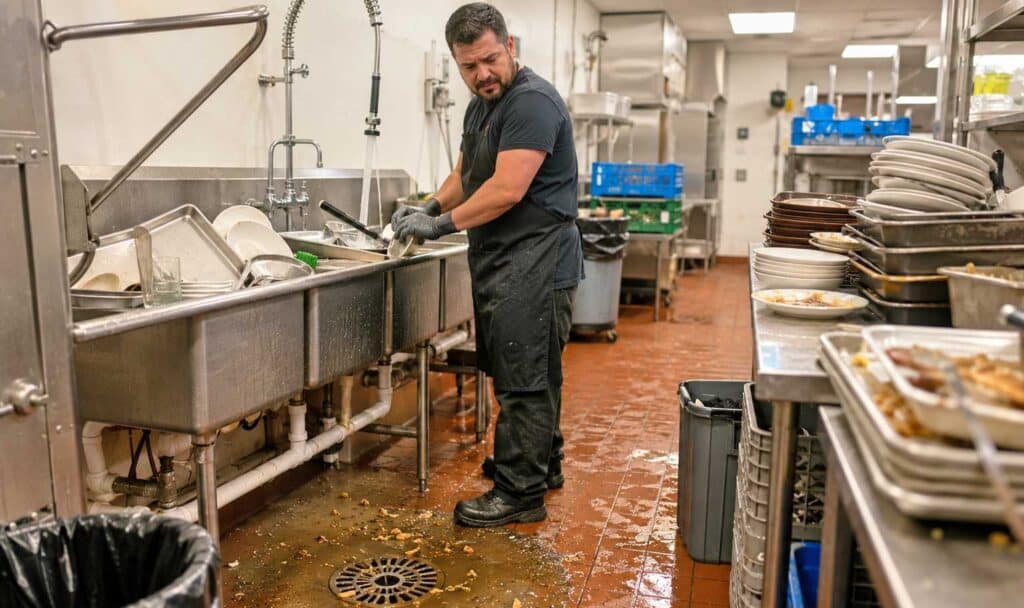
Preventing Problems From Smelly Commercial Kitchen Drains
Commercial kitchen drain odors are a common frustration. One possible cause is a dry trap that allows sewer gas smells to come back through the drain. Trap primers can help keep water in the trap, but odor prevention also depends on keeping food solids, grease, and organic buildup out of your drain system.
-
- Commercial kitchen drain traps are designed to hold water, creating a seal that helps block sewer gas and unpleasant odors from entering the kitchen.
- A dry trap can happen when a commercial kitchen drain does not receive regular water flow, allowing the water seal to evaporate.
- Trap primers help maintain the water seal in drains that are more likely to dry out.
- Not every commercial kitchen drain smell is caused by a dry trap. Food debris, grease buildup, dirty drains, and overloaded grease traps can also create odors.
- Commercial kitchens can reduce odors and backups by scraping food waste before washing, maintaining grease traps, and keeping solids out of the drain system.
- The Drain Strainer helps capture food solids before they enter the drain, reducing the material that contributes to clogs, odors, backups, and grease trap problems.
Let’s take a closer look at each of these main points in more detail.
Why Commercial Kitchen Drains Smell and How To Prevent Dry Traps
A foul smell coming from a commercial kitchen drain can quickly become a frustrating problem in the dish room.
Even when the kitchen has been cleaned, the trash has been removed, and the grease trap has been serviced, odors can still appear around dish areas, prep stations, mop sinks, or floor drains.
One of the most common reasons this happens is a dry trap. While that may sound like a small plumbing issue, it can create a big problem for restaurants, cafeterias, assisted living kitchens, hotels, schools, and other foodservice operations.
Commercial kitchen drain odors can affect employees, customers, sanitation concerns, and the overall perception of how clean the kitchen really is.
Understanding how commercial kitchen drain traps work, what trap primers do, and why food solids also contribute to drain odors can help commercial kitchen owners and operators take a more complete approach to odor and backup prevention.
How Commercial Kitchen Drains Impact Your Operation
Commercial kitchen drains play an important role in your dish room. They collect water from cleaning, spills, equipment discharge, dishroom activity, and daily sanitation routines.
When everything is working properly, commercial kitchen drains help move water out of the kitchen efficiently and safely.
But commercial kitchen drains floor can also become a source of trouble when they are ignored.
Because they are located in high-use areas, they often collect more than water. Food particles, grease, sauces, starches, coffee grounds, mop water, and other debris can all make their way toward the drain.
Over time, that material can contribute to odors, buildup, slow drainage, and backups.
Before a kitchen operator can solve a commercial kitchen drain smell, it helps to understand whether the odor is coming from a dry trap, organic buildup inside the drain, a grease trap issue, or a larger plumbing problem.
What Is A Commercial Kitchen Drain Trap?
Most commercial kitchen drains are connected to a trap. The trap is a curved section of pipe designed to hold a small amount of water.
That water creates a seal between the kitchen and the sewer or drain system.
When the trap has water in it, the water acts as a barrier. It allows wastewater to move through the drain while helping block sewer gas and unpleasant odors from coming back up into the kitchen.
This water seal is a simple but important part of keeping your commercial kitchen smelling clean and operating properly.
The problem begins when that water seal disappears. Once the trap dries out, there is no longer a barrier preventing odors from escaping through the floor drain.
What Is A Dry Trap?
A dry trap happens when the water inside the drain trap evaporates or is otherwise lost. This is especially common in floor drains that do not receive regular water flow.
In a busy commercial kitchen, some drains are used constantly.
Others may be tucked under equipment, located in a storage area, positioned near a water heater, or placed in a section of the kitchen that does not get washed down as often.
If those drains sit unused for long periods, the water in the trap can slowly evaporate.
Heat, air movement, ventilation, and the overall demands of a commercial kitchen can speed up that evaporation.
Once the trap is dry, sewer gas or drain odors can move back through the pipe and into the building.
Pouring water into the drain may temporarily restore the trap seal. However, if the drain continues to dry out, the smell will likely return. That is where a trap primer may become part of the solution.
What Is A Trap Primer?
A trap primer is a plumbing device designed to add water to a drain trap automatically. Its purpose is to help maintain the water seal in drains that may not receive regular use.
The concept is fairly simple. If a commercial kitchen drain does not get enough water on its own, a trap primer helps make sure the trap does not dry out.
By keeping water in the trap, the primer helps reduce the chance of sewer gas odors coming up through the floor drain.
Trap primers are not something restaurant operators should install or repair on their own.
They should be evaluated, installed, and serviced by a qualified plumber who understands local plumbing requirements and commercial kitchen systems.
If a commercial kitchen drain consistently smells like sewer gas, a plumber can help determine whether the trap is drying out, whether the trap primer is missing or malfunctioning, or whether another issue is causing the odor.
A Trap Primer Does Not Solve Every Drain Odor
Trap primers are important, but they are not a cure-all for every commercial kitchen drain smell.
A trap primer helps solve a water seal problem. It does not clean out food debris, remove grease buildup, eliminate sludge, or fix a clogged drain line.
This distinction matters because commercial kitchen drains can still smell bad even when their traps still have water in them.
Food particles and organic material can collect in and around the drain. Grease can coat the inside of the pipe and trap more debris.
Sauces, dairy, meat scraps, starches, and other food waste can break down and create strong odors over time.
A dry trap may allow sewer gas to escape, but a dirty drain can create odors all on its own. That is why restaurants need to think about odor prevention in two ways.
They need to maintain the trap seal, and they also need to reduce the amount of food waste and grease entering their drain system.
Why Commercial Kitchen Floor Drains Smell
There are several reasons a floor drain may smell in a commercial kitchen. A dry trap is one of the most common, but it is only one possibility.
If the trap has dried out, sewer gas may be coming back through the drain. This type of smell is often sharp, unpleasant, and noticeable even when the surrounding area appears clean.
If the odor improves temporarily after water is added to the drain but comes back later, a dry trap may be part of the problem.
Food debris is another common source of odor. Commercial kitchens produce a steady stream of scraps, sauces, starches, coffee grounds, grease, and other material.
When those solids enter the drain, they can settle in low spots, cling to grease buildup, or collect around strainers and drain edges. As that material breaks down, it can create strong, rotten odors.
Grease and FOG can also contribute to the problem. Fats, oils, and grease do not simply disappear once they leave the sink.
They can stick to pipe walls, trap food particles, and create buildup inside the drain system. Over time, this can contribute to slow drainage, recurring smells, and backups.
A grease trap may also be involved. If too much food waste and grease are entering the system, the grease trap may become overloaded or smell worse between service visits.
When food solids accumulate inside the grease trap, they can break down and create odors that affect the kitchen.
Persistent odors, recurring backups, or wastewater coming up through commercial kitchen drains should never be ignored.
Those signs may point to a larger plumbing issue that needs professional attention.
Odor Prevention Starts Before Waste Reaches The Drain
Once a kitchen has addressed dry traps and plumbing-related odor issues, the next step is looking upstream. Many commercial kitchen drain problems begin before anything ever reaches the floor drain, grease trap, or plumbing line.
Food solids are one of the biggest contributors to odors and backups. Even when scraps are small, they can create problems once they enter the drain system.
Rice, pasta, bread, vegetable peelings, meat scraps, coffee grounds, and heavy sauces can all collect in pipes and grease traps. Some materials swell with water. Others settle, rot, or combine with grease to form dense buildup.
This is where many kitchens underestimate the problem. If food waste goes down the drain, it still has to go somewhere.
Even when a commercial garbage disposal grinds it into smaller pieces, those particles are still moving through your plumbing system.
They may not cause a problem immediately, but over time they can contribute to clogs, odors, grease trap inefficiency, and emergency plumbing calls.
Keeping food solids out of your drains is one of the most practical ways to reduce long-term odor problems in a commercial kitchen.
The Connection Between Food Solids, Grease Traps, And Drain Odors
Grease traps are designed to capture fats, oils, grease, and solids before they move farther into the plumbing system.
But they work better when kitchens reduce the amount of food waste entering them in the first place.
When large amounts of food solids go down the drain, they can take up valuable space in the grease trap. That can reduce the system’s effectiveness and lead to more frequent pumping or cleaning.
As food waste sits in the trap, it can break down and create strong odors. The more solids entering the system, the more opportunity there is for smell, sludge, and buildup.
This is especially important in busy dish rooms. Plates, pans, prep containers, utensils, and serving trays often arrive at the sink with leftover food still on them.
If staff are rushed, those solids can easily end up in the drain. Over time, that daily habit can become a major contributor to odor and backup problems.
A kitchen may be able to solve a dry trap issue with a trap primer, but if food solids continue entering their plumbing system every day, the kitchen may still experience unpleasant smells and recurring commercial kitchen drain problems.
Best Practices For Reducing Commercial Kitchen Drain Odors
Preventing commercial kitchen drain odors requires a combination of good plumbing maintenance and better kitchen habits.
Commercial kitchen owners and operators should make sure drains that frequently smell are evaluated by a plumber, especially if the odor may be related to a dry trap or sewer gas.
Kitchens should also pay attention to drains that do not receive regular water flow. If certain drains are located in low-use areas, under equipment, or away from daily washdown activity, they may be more likely to dry out.
A qualified commercial kitchen plumber can determine whether those drains need trap primer attention or another approved solution.
Daily cleaning routines also matter. Staff should understand that floor drains are not food waste disposal points. If food scraps, grease, and dirty water are constantly being pushed toward the drain, odor problems are more likely to return.
Scraping dishes, pans, and prep containers before washing is one of the simplest and most effective habits a kitchen can build.
The more solids that are removed before items reach the sink, the less material there is to rot inside the drain system or collect inside the grease trap.
Grease trap service should also stay on schedule. A neglected grease trap can make odor problems much worse and can create larger plumbing concerns for the kitchen.
But grease trap service works best when paired with a strong source-control strategy that keeps unnecessary solids out of the system between service visits.
How The Drain Strainer Protects Your Drains
The Drain Strainer helps captures food solids before they enter your commercial kitchen drains while still allowing your sinks to drain quickly.
It was designed by a former restaurant owner to support cleaner, more efficient kitchen operations by stopping more waste at the source.
By capturing food waste before it reaches the drain, The Drain Strainer helps reduce the material that contributes to clogs, odors, backups, and grease trap buildup.
For kitchens that are tired of dealing with slow drains, foul smells, emergency plumbing calls, or overloaded grease traps, source control can make a meaningful difference.
The Drain Strainer also provides an effective and affordable alternative to a traditional commercial garbage disposal.
Garbage disposals may grind food into smaller particles, but those particles still enter your plumbing system.
The Drain Strainer takes a different approach by helping keep those solids out of the drain in the first place. It requires no electricity and no water, making it a practical option for commercial kitchens looking for a simpler way to manage food waste before it becomes a plumbing problem.
Prevent Smelly Commercial Kitchen Drains With Our Scrap Collector System
If you want to keep your prep sinks from getting clogged with food solids, The Drain Strainer™ scrap collector system captures food debris that either can be disposed of or kept for composting.
The Drain Strainer™ can help you avoid issues with what gets put down your three bay sinks. No matter how much you focus on employee training, short cuts are always going to be taken and items are going to be put down your commercial disposal unit that can harm it.
If a utensil accidentally goes down The Drain Strainer™, it simply ends up in your strainer drawer and can be easily retrieved without any damage.
Commercial kitchen drain odors can be frustrating, but they are also a useful warning sign.
A smell coming from a commercial kitchen drain may point to a dry trap, a trap primer issue, food debris, grease buildup, an overloaded grease trap, or a larger plumbing concern.
The first step is identifying the source of the smell. If the issue is related to a dry trap, a qualified plumber can help determine whether a trap primer or another repair is needed.
But once the trap seal is addressed, kitchen operators should also take a closer look at what is entering the drain system every day.
Food solids, grease, and organic buildup are major contributors to commercial kitchen odors and backups. Keeping more of that material out of the drain can help protect the kitchen, reduce plumbing headaches, and support better grease trap performance.
If your commercial kitchen is dealing with recurring drain odors, slow drains, grease trap problems, or too much food waste entering the plumbing system, The Drain Strainer can help you stop more solids at the source.
By capturing food waste before it reaches the drain and still allowing your sinks to drain quickly, The Drain Strainer helps commercial kitchens take a smarter, cleaner, and more proactive approach to preventing commercial kitchen drain backups and odors.
If you want to avoid issues with clogged grease traps or foodservice disposers that are leaking or have burned out motors, The Drain Strainer™ scrap collector system is an effective and affordable commercial kitchen waste disposal system alternative that doesn’t require the use of water or electricity.
Invented by a former restaurant owner, The Drain Strainer™ can eliminate issues with mangled silverware or dangers from employees putting their hands down the commercial waste disposal unit trying to clear out a clog.
Click here to find out more about how our foodservice disposer alternative can keep your grease trap free from clogs.
Let The Drain Strainer™ keep your three bay sinks running smoothly by capturing food solids and avoiding any problems with your commercial kitchen floor drains.