

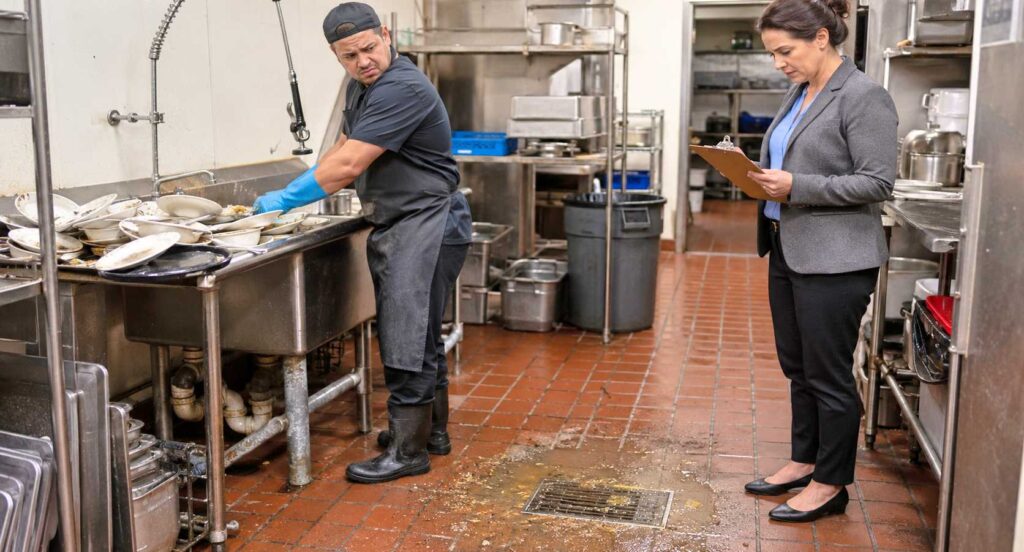
Will Your Commercial Kitchen Floor Drains Pass Inspection?
Your commercial kitchen floor drains say a lot about the overall condition of your operation. Clean, fast-draining, odor-free drains help create a better impression during inspections while also supporting a safer, smoother, and more efficient kitchen.
-
- Inspectors notice slow drains, foul odors, standing water, dirty floor drains, and other signs that your drainage system is not being properly maintained.
- Daily drain habits matter because food waste, grease, and debris can build up over time and create sanitation concerns, clogs, odors, and backups.
- Proper drainage time, clean floor drains, and odor control help your kitchen look more organized, sanitary, and inspection-ready.
- Air gaps are an important part of drain protection, and The Drain Strainer includes a built-in air gap that helps keep sewer backups from backing up into your sinks.
- Keeping written records of drain cleaning, grease trap maintenance, plumbing service, and staff checklists help show inspectors that your kitchen has a consistent maintenance system in place.
- The Drain Strainer captures food solids before they enter your plumbing, helping reduce clogs, odors, slow drainage, and dish room disruptions.
Let’s take a closer look at each of these main points in more detail.
Your Commercial Kitchen Floor Drains Say a Lot About Your Operation
When a health inspector walks into a commercial kitchen, they are not just looking at food storage, prep surfaces, handwashing stations, and checking the temperatures of your make table and walk-in.
They are also paying attention to the condition of your kitchen as a whole. One of the easiest ways to tell how well a kitchen is being maintained is by looking at the commercial kitchen floor drains.
Slow drains, foul odors, standing water, clogged floor drains, and food waste buildup all send the wrong message and your plumbing is a breeding ground for problems.
Even if the rest of your kitchen looks clean, neglected commercial kitchen floor drains will raise questions about sanitation, maintenance routines, pest prevention, and overall operating standards.
For restaurant owners, foodservice directors, kitchen managers, and commercial kitchen operators, proper drain health should not be something you only worry about when there is a problem. It should be part of your daily routine.
Keeping your commercial kitchen floor drains clean, clear, and protected will help your kitchen stay inspection-ready while also making day-to-day operations run more smoothly.
That is where The Drain Strainer can make a big difference.
Inspectors Pay Attention to Your Commercial Kitchen Floor Drains
Your commercial kitchen floor drains handle a lot more than water.
Every day, they are exposed to food scraps, grease, starches, sauces, sediment, dishwater, and other waste from a busy kitchen.
If those materials are allowed to build up inside your plumbing system, problems can develop quickly.
A drain that is not properly maintained can lead to slow drainage, unpleasant smells, standing water, backups, and sanitation concerns.
It can also contribute to pest activity if food particles are left sitting in drain lines, floor drains, or hard-to-clean areas.
These are the types of issues that can make your commercial kitchen look poorly maintained during an inspection, even if your team is doing a good job in other areas.
Inspectors understand that commercial kitchen floor drains are a major part of kitchen sanitation.
When drains are clean, fast, odor-free, and properly protected, it shows that your kitchen has strong systems in place.
When drains are neglected, it may suggest that other maintenance tasks are being overlooked as well.
The condition of your commercial kitchen floor drains helps tell the story of your kitchen. The Drain Strainer helps make sure that story is a good one.
Small Drain Problems Can Turn Into Bigger Inspection Issues
Most major drain problems don’t start as major problems. They usually begin with a series of bad daily habits.
A little food waste gets rinsed down the sink. Grease-coated scraps make their way into the drain.
A floor drain starts to smell, but everyone is too busy to deal with it. A sink drains a little slower than usual, but it still works, so no one stops to investigate.
Over time, all these small issues add up to larger problems. Food solids can collect in drain lines. Grease can cling to pipes. Odors can become more noticeable. Wastewater can begin draining more slowly.
Eventually, your commercial kitchen may be dealing with a clog, a backup, or an emergency plumbing call in the middle of a busy shift.
Those problems are frustrating on any day, but they are even worse when they happen during an inspection.
A commercial kitchen that has slow drains, odors, or standing water is much harder to defend than one that has clean and clear drains.
The Drain Strainer helps reduce these risks by catching food solids before they enter your drain system.
Instead of allowing scraps to wash into the plumbing, The Drain Strainer gives your staff an easier way to intercept and remove that waste before it becomes a bigger problem while still allowing your sinks to drain quickly.
Daily Drain Habits Matter More Than Most Employees Realize
A commercial kitchen’s drain health depends on the habits that your staff follows every day.
It is not enough to clean drains once in a while or wait to react until after a clog forms. The best kitchens build drain protection into their normal workflow.
That starts with keeping food waste out of the drains as much as possible.
Plates, pans, prep containers, and cookware should be scraped before they reach the dish area. Staff should avoid treating sinks and floor drains like trash cans.
Drain baskets, screens, and strainers should be cleaned regularly so they can continue doing their job.
At the end of each shift, kitchen staff should pay attention to how well water has been draining.
If a sink is emptying slowly, if water is pooling near a floor drain, or if a drain area smells bad, those issues should be reported and addressed before they get worse. A few minutes of attention each day can prevent hours of disruption later.
The Drain Strainer makes these daily routines easier because it is designed to capture food waste before it enters your plumbing system.
When your staff can see and remove the waste, they are less likely to ignore it. That helps keep the dish area cleaner, the drains clearer, and the kitchen better prepared for inspections.
Drainage Time Is an Important Warning Sign
One of the simplest ways to judge the condition of commercial kitchen floor drains is to pay attention to drainage time.
Water should move through the sink and drain system efficiently. If water lingers, drains slowly, or backs up during normal use, that can be a sign of buildup or blockage.
Slow drainage can create several problems in a busy commercial kitchen.
It can delay dishwashing, create bottlenecks, leave dirty water sitting longer than it should, and make it harder for staff to keep the area clean.
It can also indicate that food waste, grease, or other debris is collecting somewhere in the system.
From an inspection standpoint, slow drains raise concerns because they suggest the kitchen may not be removing wastewater properly. Even if the issue is still minor, it can create the appearance of a larger sanitation problem.
By keeping food solids out of your plumbing, The Drain Strainer helps support better drain performance.
It does not replace proper plumbing maintenance, but it can reduce one of the most common causes of slow commercial kitchen drains: food waste entering your plumbing day after day.
Odors Are a Red Flag You Should Not Ignore
A clean commercial kitchen should not smell like a sewer.
When foul odors start coming from sinks, floor drains, dish areas, or prep areas, that is usually a warning sign that something needs attention.
Drain odors can come from several sources. Food waste may be trapped in the line. Grease and organic buildup may be collecting inside the plumbing. A floor drain may need cleaning. A trap may be dry. Wastewater may not be moving through the system the way it should.
Whatever the cause, odors can hurt the perception of your kitchen quickly. Employees notice them. Customers may notice them if the smell travels beyond the kitchen.
Inspectors notice them as soon as they walk into the area.
The Drain Strainer helps reduce odor problems by keeping more food waste out of your plumbing.
When less organic material is allowed to sit inside the plumbing, there is less opportunity for that waste to break down and create unpleasant smells.
Air Gaps Are an Important Part of Drain Protection
Air gaps are another important detail for commercial kitchens to understand.
An air gap helps create separation between the sink and your sewer system.
This separation is important because it helps reduce the risk of contaminated water backing up into your sinks whenever there’s a blockage.
When you install The Drain Strainer, you are getting more than a wet waste interceptor. You are getting a wet waste interceptor with a built-in air gap.
That matters because if the sewer ever backs up, wastewater is designed to spill out the front of our strainer drawer box instead of backing all the way up into your sinks.
This is the kind of detail that shows your kitchen is taking drain health and sanitation seriously. You are not just waiting for problems to happen.
You are putting better protection in place before a backup, clog, or inspection issue creates a bigger headache.
Commercial Kitchen Floor Drains Deserve Regular Attention Too
Commercial kitchen floor drains are easy to overlook because they are not always part of the main workflow.
In many kitchens, they sit under sinks, near dish machines, close to prep areas, or along the path where water is frequently sprayed or mopped. Because they are out of the way, they can become neglected.
That can be a problem during inspections. A dirty floor drain can collect food debris, grease, grime, and standing water. It can also become a source of odors or pest attraction.
If an inspector sees buildup around a floor drain, missing covers, pooling water, or signs that the drain is not being cleaned regularly, it can reflect poorly on the kitchen’s overall maintenance standards.
Commercial kitchen floor drains should be part of your regular cleaning routine.
Staff should make sure drain covers are in place, surrounding areas are clean, water is flowing properly, and no food waste is being swept or sprayed into the drain as a shortcut.
The better the job you do keeping food waste out of your sinks and dish area, the easier it is to keep commercial kitchen floor drains in better condition.
The Drain Strainer helps by capturing food waste before it has a chance to travel deeper into the plumbing system or contribute to problems elsewhere.
Keep Good Records Before the Inspector Asks
Good drain health is not just about what your kitchen does. It is also about being able to show that you have consistent systems in place. That is why recordkeeping matters.
Commercial kitchens should keep records of drain cleaning routines, grease trap maintenance, plumbing service calls, staff cleaning checklists, and any corrective action taken when an issue is found.
These records can be helpful if an inspector asks how often drains are cleaned, how grease and food waste are managed, or how the kitchen responds to maintenance concerns.
Documentation shows that your kitchen has a process. It also helps managers hold staff accountable because everyone knows what needs to be done and when it needs to be completed.
Train Your Staff to Protect the Commercial Kitchen Floor Drains
Drain health is a team effort. It cannot fall only on the owner, manager, or closing crew.
Everyone who works in the kitchen plays a role in keeping the commercial kitchen floor drains clean and protected.
Servers, dishwashers, prep cooks, line cooks, and cleaning staff should all understand what shouldn’t go down the drain.
They should know how to scrape food waste properly, how to use drain protection equipment, how to recognize slow drainage, and who to tell when something does not seem right.
Training does not have to be complicated. In fact, the best systems are usually simple. Staff need clear expectations and tools that make the right behavior easier to follow.
The Drain Strainer supports better habits because it gives the team a practical way to capture and remove wet waste before it enters the plumbing.
Instead of depending only on reminders, signs, or after-the-fact cleaning, your kitchen has a physical system in place to help protect the commercial kitchen floor drains throughout the day.
Better Drain Health Helps the Whole Kitchen Run More Smoothly
Inspection readiness is important, but it is not the only reason to care about drain health. Clean, fast, odor-free drains help the entire kitchen operate better.
When drains are working properly, the dish area moves faster. Staff are not standing around waiting for sinks to empty.
Floors are less likely to become wet or unsafe. Odors are easier to control. Emergency plumbing calls become less frequent. Managers spend less time reacting to preventable problems.
Healthier drains also reduce stress during busy shifts. In a commercial kitchen, small slowdowns can create big ripple effects.
If the dish room gets backed up, clean dishes, pans, utensils, and prep containers may not be available when the team needs them. That can affect service, labor, morale, and customer experience.
The Drain Strainer helps prevent those problems by keeping food waste out of the plumbing system.
It is a simple addition that can make a meaningful difference in how your kitchen operates every day.
Protect Commercial Kitchen Floor Drains With Our Scrap Collector System
If you want to keep your prep sinks from getting clogged with food solids, The Drain Strainer™ scrap collector system captures food debris that either can be disposed of or kept for composting.
The Drain Strainer™ can help you avoid issues with what gets put down your three bay sinks. No matter how much you focus on employee training, short cuts are always going to be taken and items are going to be put down your commercial disposal unit that can harm it.
If a utensil accidentally goes down The Drain Strainer™, it simply ends up in your strainer drawer and can be easily retrieved without any damage.
It’s too late to start thinking about drain health once the inspector is already in the building. Your slow drainage, odors, standing water, or visible buildup will be working against you.
Proper drain health should be part of your daily kitchen management routine. Clean drains, clear records, trained staff, proper air gaps, good drainage time, and odor control all help create a safer, cleaner, and more efficient commercial kitchen.
The Drain Strainer gives you a better way to protect your commercial kitchen floor drains before problems start.
It captures food solids before they enter the plumbing system, supports cleaner dish room operations, helps reduce clogs and odors, and includes a built-in air gap designed to help protect your sinks in the event of a sewer backup.
If you want your kitchen to run more smoothly and be better prepared when inspection time comes around, focus on your commercial kitchen floor drains.
Make The Drain Strainer part of your kitchen’s daily drain health routine and give your staff a simple, effective tool for keeping food waste out of your plumbing.
If you want to avoid issues with clogged grease traps or foodservice disposers that are leaking or have burned out motors, The Drain Strainer™ scrap collector system is an effective and affordable commercial kitchen waste disposal system alternative that doesn’t require the use of water or electricity.
Invented by a former restaurant owner, The Drain Strainer™ can eliminate issues with mangled silverware or dangers from employees putting their hands down the commercial waste disposal unit trying to clear out a clog.
Click here to find out more about how our foodservice disposer alternative can keep your grease trap free from clogs.
Let The Drain Strainer™ keep your three bay sinks running smoothly by capturing food solids and avoiding any problems with your commercial kitchen floor drains.