

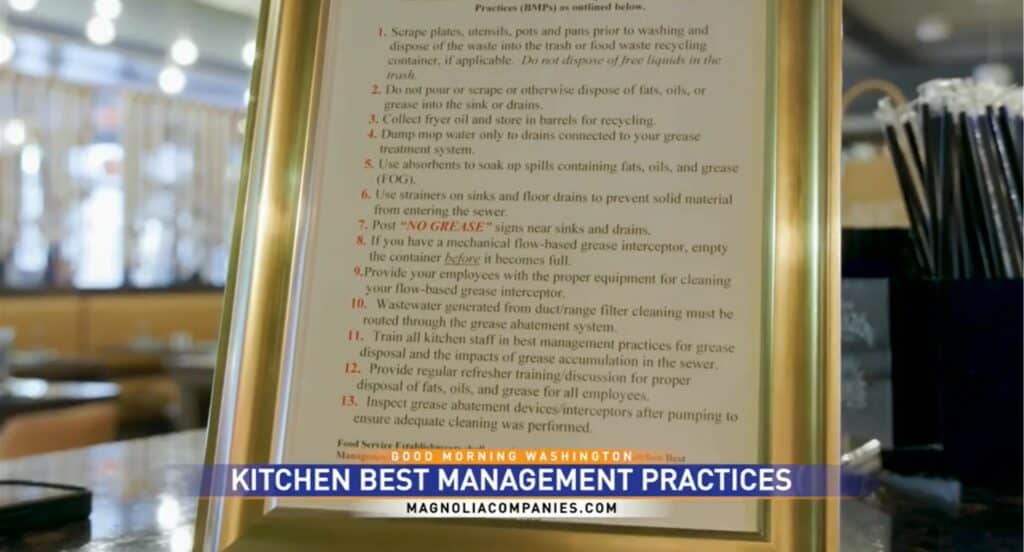
Grease Trap Cleaning Best Management Practices News Story
Grease traps play a major role in commercial kitchens in preventing plumbing problems, protecting sanitation, and supporting compliance with local ordinances. A recent television news story featuring a local plumber at a Washington DC restaurant offered some helpful reminders why grease trap cleaning matters and what restaurant owners should be doing to stay ahead of costly issues.
-
- Grease traps help separate fats, oils, and grease from wastewater before they can clog drain lines or create larger sewer problems.
- Regular grease trap cleaning is an important part of kitchen maintenance and should be handled proactively, not just when something goes wrong.
- Waiting until there is a bad odor, slow drain, or backup can lead to expensive plumbing emergencies and major operational disruptions.
- Good grease trap performance depends on daily kitchen habits like scraping plates, keeping food waste out of sinks, and disposing of used oil properly.
- Food solids can create extra buildup inside grease traps, reduce efficiency, and increase the need for grease trap cleaning.
- The Drain Strainer can help support a better grease management strategy by catching food solids before they enter the plumbing system and grease trap.
Let’s take a closer look at each of these main points in more detail.
Regular Grease Trap Cleaning Avoids Headaches
A local plumbing company in Washington, DC was recently interviewed by a television news reporter at a local restaurant about grease trap cleaning in commercial kitchens.
Grease traps may not be a glamorous part of running a restaurant, but they are important and this news story covered how they work and why restaurant owners cannot afford to ignore cleaning them.
For commercial kitchen owners and operators, grease traps are one of those systems that tend to stay out of sight and out of mind until something goes wrong.
By the time a problem becomes obvious, your restaurant may already be dealing with slow drains, foul odors, wastewater backups, expensive emergency service, or even compliance issues with local ordinances.
This news story serves as a good reminder that grease trap cleaning is not just a plumbing issue.
It is an operational issue, a sanitation issue, and in many cases, a regulatory issue as well.
Why Grease Traps Matter In Your Commercial Kitchen
Grease traps exist to intercept fats, oils, and grease before they move farther into the plumbing system.
In a busy restaurant, grease is created through cooking, dishwashing, rinsing cookware, cleaning prep areas, and washing plates and utensils.
Without an effective grease control device in place, that material can move into drain lines and eventually into the local sewer system.
That's where the problems begin. Grease does not stay in a harmless liquid state forever. As it cools, it can thicken and cling to the inside of pipes.
Over time, the grease buildup restricts flow, traps other debris, and creates the perfect setup for clogs and backups.
What begins as a kitchen waste issue can quickly become a plumbing emergency.
This news story also touched on a broader point that many restaurant operators sometimes forget.
Grease traps do not just protect the restaurant itself. They also help protect municipal infrastructure and local waterways.
When grease escapes into the local sewer system, it can contribute to serious blockages and environmental problems farther downstream.
That is why so many local jurisdictions regulate grease trap cleaning in commercial kitchens.
How Grease Trap Cleaning Works
Another valuable part of this news story was the explanation of what servicing a grease trap actually involves.
People outside the restaurant or plumbing industries who hear the phrase "grease trap pumping" might assume it is a simple one-step process.
In reality, proper service is part grease trap cleaning, part inspection, and part compliance management.
The news report showed that grease control systems can come in different forms depending on the layout and needs of the restaurant.
Some kitchens use smaller interior units, while others have larger grease interceptors that handle a heavier volume of wastewater.
No matter the design, the basic purpose is the same.
The grease control system separates grease and waste so they can be removed before they create bigger problems.
A proper service visit typically involves checking the condition of the unit, measuring the buildup inside, removing the accumulated grease and waste, and making sure the grease trap is operating as intended.
A knowledgeable service provider should not just be emptying the grease trap and leaving.
They should also evaluating whether the grease trap is being serviced often enough, whether the kitchen’s best practices are helping or hurting their grease control system, and whether the restaurant is staying within local expectations for maintenance.
Your grease trap should not be treated like an emergency-only piece of equipment.
It should be treated like a well-maintained system that receives regular professional attention before it reaches a failure point.
Waiting For Problems Is A Costly Mistake
One of the clearest takeaways from the news story was that restaurant owners should not wait until there is an overflow, a bad odor, or a drainage issue before calling for service.
Waiting until it's a crisis is one of the most expensive mistakes a kitchen can make.
Emergency plumbing calls are disruptive by nature.
They often happen during the worst possible time, such as during a lunch rush, on a busy weekend, or right before a health inspection.
When a grease trap or related drain line fails, the issue can affect dishwashing, food prep, sanitation, and the overall guest experience.
Grease trap cleaning stinks and the last thing you want is to have your grease trap serviced with a dining room full of customers.
In severe cases, your commercial kitchen may become unusable until the problem is resolved.
The news story also pointed out that in many areas, grease trap cleaning is not optional.
Local ordinances may require regular service, recordkeeping, or adherence to best management practices.
That means waiting too long is not just risky from a maintenance standpoint.
It may also put a restaurant in a poor position if there are problems downstream and local regulators come asking questions.
A far better approach is to work with a qualified grease trap cleaning provider on a routine schedule.
When service is proactive rather than reactive, restaurant owners gain predictability.
They reduce the odds of a surprise backup, avoid a lot of unnecessary stress, and have a much better chance of keeping their commercial kitchen running smoothly.
Best Practices For Grease Trap Cleaning In A Restaurant
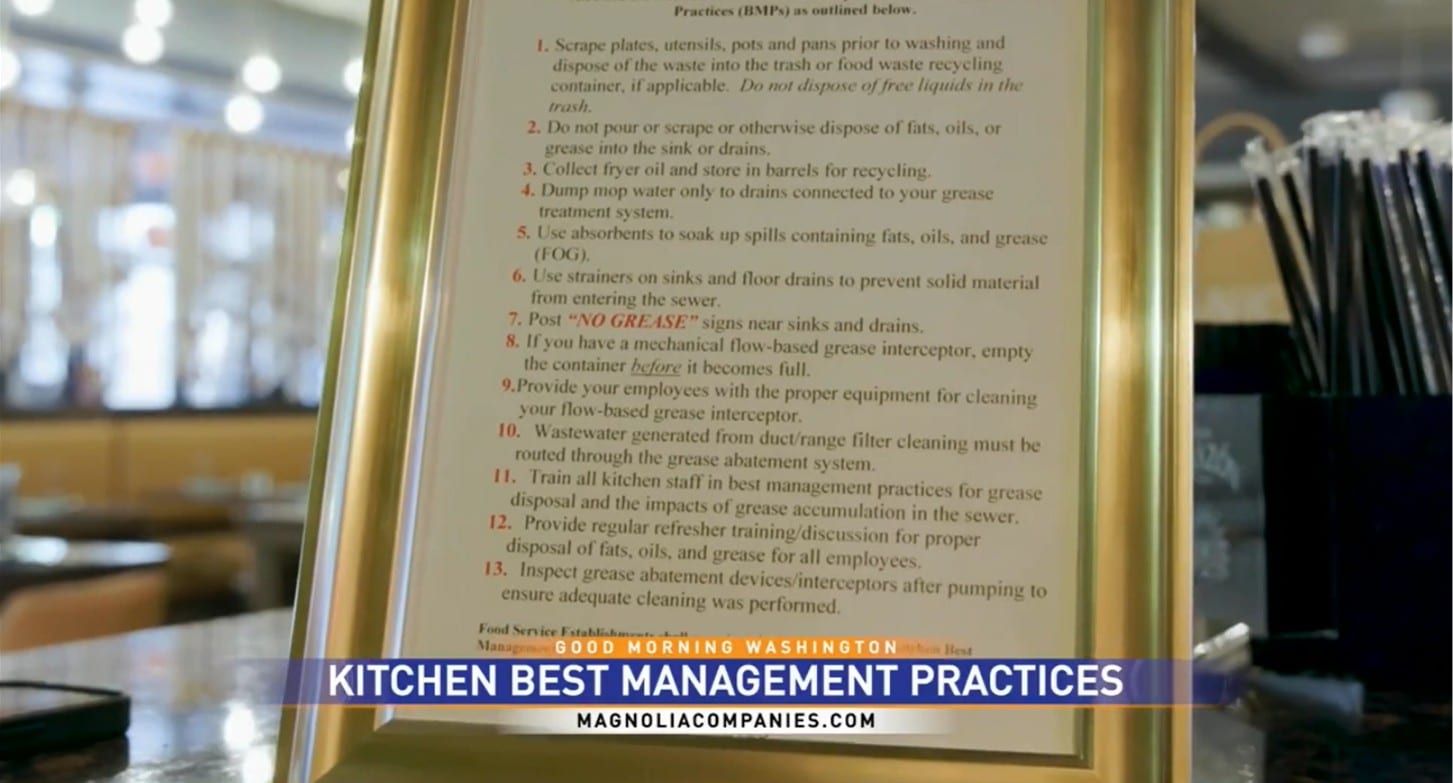
The news story did a nice job discussing how grease trap performance starts with everyday kitchen habits and training for your staff.
Your grease trap can only do so much if staff members are constantly sending the wrong materials into the drain.
An important best practice is training employees to scrape plates, pans, and prep waste into the trash before rinsing.
Food waste may not seem like a major concern compared to grease, but it contributes to problems inside plumbing systems and grease traps.
Food solids can collect inside the trap, reduce capacity, increase odors, and make the entire system work less efficiently.
Another key best practice is keeping liquid grease and oil out of the sink whenever possible.
Used fryer oil and cooking grease should be collected and disposed of through the proper channels rather than poured down the drain.
Hot water and soap may seem like they are solving the problem in the moment, but all they are really doing is moving grease farther down the line until it cools and sticks somewhere else.
Consistency matters too. A commercial kitchen cannot rely on one employee knowing the rules while everyone else does their own thing.
Best practices need to be part of onboarding and training, part of management expectations, and part of the daily routine.
When the entire kitchen follows the same habits, your grease trap has a much better chance of doing its job.
How A Solids Separator Like The Drain Strainer Can Help
Food solids play a big role in grease trap performance. This is why The Drain Strainer makes a lot of sense in your commercial kitchen to help keep food solids out of your grease trap.
Grease traps are designed to separate fats, oils, and grease from wastewater.
But they are not at their best when they are being overloaded with food scraps, prep debris, breading, rice, pasta, vegetable trimmings, and other solids from a busy commercial kitchen.
When too many food solids enter the grease control system, they take up valuable space inside the trap, add to the sludge buildup, increase odor issues, and can contribute to more frequent grease trap cleaning needs.
That's why a solids separator like The Drain Strainer can be such a valuable addition.
By catching food waste before it enters the drains, The Drain Strainer helps reduce the amount of debris heading toward the grease trap in the first place.
That means your grease trap can focus more on separating grease the way it was intended to, instead of becoming a holding tank for food scraps and sludge.
For commercial kitchen owners and operators, that translates into a cleaner grease control system, fewer drain-related headaches, and a more efficient overall grease management strategy.
It also supports the same best management practices emphasized in the news story.
If staff members are trained to keep solids out of the plumbing, adding a tool that helps enforce that habit at the source is a practical upgrade.
Grease Trap Cleaning Is Part Of A Bigger Strategy
The larger lesson from this news story is that grease trap service works best when it is part of a broader kitchen maintenance strategy.
Restaurants need the right equipment, the right service schedule, and the right employee habits all working together.
A grease trap by itself is not a complete solution. It is one part of a system.
Your commercial kitchen also needs proper staff training, good cleaning procedures, responsible grease disposal habits, and a realistic plan for keeping food solids out of the plumbing.
When those pieces are missing, the grease trap ends up doing more than it was designed to do, and that is when performance starts to suffer.
Restaurant operators who take a more proactive approach usually come out ahead.
They are more likely to avoid emergencies, more likely to stay in compliance, and more likely to protect both their kitchen operations and their long-term plumbing costs.
A Smarter Way To Protect Your Grease Trap And Your Plumbing
This news story was a helpful reminder that your grease trap plays a critical role in your commercial kitchen.
It helps keep fats, oils, and grease from moving into drain lines and sewer systems, it supports sanitation and compliance efforts, and it can save restaurants from costly plumbing disasters when properly maintained.
But regular grease trap cleaning should not be the only line of defense.
If you really want to protect your plumbing and help your grease trap perform better, you also need to stop food solids before they enter the drains. That's where The Drain Strainer can make a real difference.
By helping commercial kitchens capture food waste at the source, The Drain Strainer supports cleaner drains, reduces unnecessary strain on grease traps, and helps restaurant owners build a more effective grease management program overall.
If you want a smarter way to keep solids out of your plumbing and support the long-term health of your kitchen, The Drain Strainer is a practical solution worth adding to your operation.
To prevent problems in your commercial kitchen drains that can result from having a clogged grease trap, consider installing The Drain Strainer. Invented by a former restaurant owner, The Drain Strainer is a commercial garbage disposal alternative that captures food solids that could clog your pipes and grease trap while still allowing your sinks to drain quickly.