


The Drain Strainer Helps Prevent Bad Publicity From Grease Trap Clogs
A recent television news story from a village in New York State is a stark reminder that commercial kitchen grease traps clogs can quickly become bigger than a back-of-house maintenance issue. When fats, oils, grease, and food debris make their way into drains, grease traps, storm sewers, or municipal sewer lines, the consequences can affect the restaurant, the local municipality, nearby waterways, and the surrounding community and lead to bad publicity for your business.
This news story highlights several important lessons for commercial kitchen owners and operators:
-
- Grease trap clogs can become public problems when local public works crews have to repeatedly clear blockages connected to a business.
- Municipalities may look for ways to recover cleanup costs when commercial kitchens contribute to repeated grease-related sewer issues.
- Improper grease disposal, including pouring used oil into a storm sewer or drain, can lead to environmental concerns, enforcement action, and reputational damage.
- Your grease trap is not designed to handle large amounts of food debris, scraps, and solids from the dishroom.
- Food debris can make grease trap clogs more likely by adding buildup, odors, clogs, and extra strain on the plumbing system.
- The Drain Strainer helps commercial kitchens capture food solids before they reach the drain, supporting better grease trap performance and helping reduce the risk of costly grease trap clogs.
- Smart staff training, responsible grease disposal, regular grease trap maintenance, and better drain protection all work together to help kitchens avoid problems with local municipalities.
Let’s take a closer look at each of these main points in more detail.
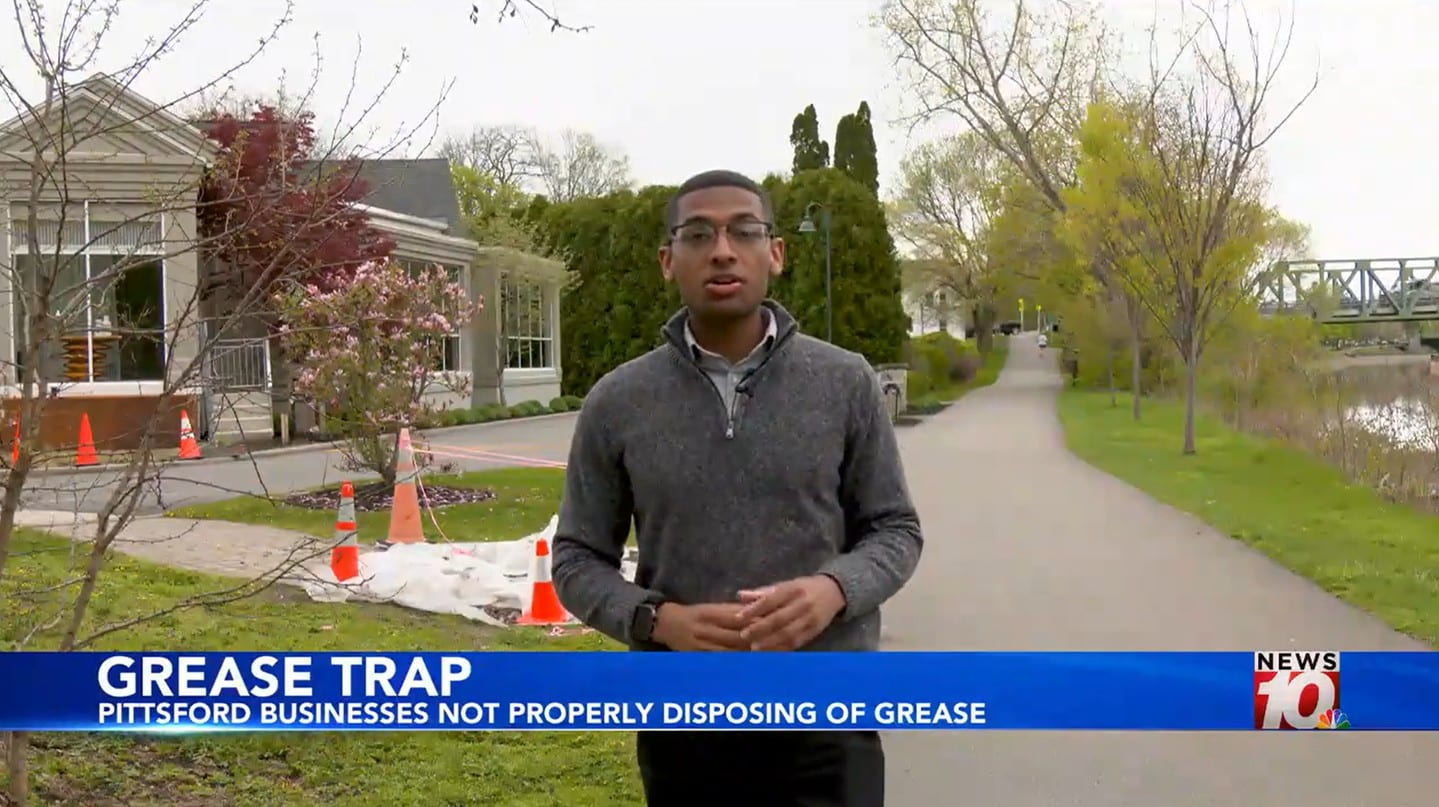
Grease Trap Clogs Can Create Issues Beyond The Kitchen Door
A recent local news television story out of a village in New York State should get the attention of every restaurant owner, commercial kitchen manager, and foodservice operator.
According to the report, local Public Works crews have been repeatedly called in to clear grease-related problems connected to a business in the village’s main business district.
Village Board Members have discussed how these cleanups are being handled, who is paying for them, and whether local code needs to be updated so the municipality can recover the costs.
The issue is not just that a grease trap needed attention.
The larger concern is that material that should not have been going down the drain was making its way into the system often enough that public works crews were reportedly being pulled away from their regular responsibilities.
Instead of focusing on the core work of maintaining the village, crews were being sent to help clear blockages that could threaten local sewer lines.
For commercial kitchen operators, this is a clear reminder that grease trap clogs are not just a maintenance inconvenience.
When fats, oils, grease, and food debris leave your kitchen and create problems downstream, they can become a municipal issue, a taxpayer issue, an environmental issue, and a public relations issue.
Local Governments Are Paying Closer Attention To Grease Disposal
The news story also noted that local officials were working on potential legislation to address grease disposal and cost recovery.
If a commercial kitchen repeatedly contributes to grease-related sewer problems, the municipality may look for ways to make that business responsible for the cost of cleanups.
That kind of response should not come as a surprise to anyone in the foodservice industry.
Grease in sewer systems is a major problem because it does not simply disappear once it goes down the drain.
As fats, oils, and grease cool, they can harden inside pipes. When that grease combines with food scraps, paper, sediment, and other material, it can create thick blockages that are difficult and expensive to remove.
For commercial kitchens, that may start off as a slow drain, a bad smell, or a grease trap that needs service more often than expected.
For the local municipality, it can turn into a blocked sewer line, an emergency service call, or a potential backup that affects nearby businesses and residents.
That is why local boards, code enforcement officers, and Public Works departments are increasingly focused on how commercial kitchens handle grease and food waste.
One Bad Grease Decision Can Create A Big Public Relations Problem
The same news story also referenced a separate incident where an employee at another local restaurant was caught pouring several gallons of used grease into a storm sewer.
A witness recorded the incident, environmental officials responded, and spill control measures were put into place because the storm sewer drained toward a nearby creek.
That situation is an extreme example, but it illustrates why grease handling has to be taken seriously at every level of a restaurant operation.
Used cooking oil should never be poured into a storm drain, sewer grate, floor drain, sink, parking lot, or street. It should be collected and disposed of through the proper approved process.
The restaurant involved in that incident reportedly had a proper holding tank available, but the employee did not use it.
Sometimes a business may have the right equipment and still end up with a serious problem because staff members are not trained, are rushing, or are not following procedures.
That is why grease management needs to be built into the daily routine of the kitchen.
It cannot depend on everyone doing the right thing only when a manager is watching.
Your Grease Trap Is Not A Garbage Can
A grease trap is one of the most important pieces of protection in a commercial kitchen, but it cannot do its job properly if it is constantly being overloaded with food solids.
Too many operators think of the grease trap as the final place where everything can go.
But in reality, the less food waste and debris that reaches your grease trap, the better.
Food scraps, sauces, rice, pasta, batter, meat trimmings, vegetables, coffee grounds, and other solids can all add to the problem.
Once they enter the drain system, they can settle in pipes, build up in the grease trap, contribute to odors, and make blockages more likely.
When those solids mix with fats, oils, and grease, the result can be a heavy, sticky mess that is harder to pump, harder to clean, and more likely to create grease trap clogs that create problems downstream.
The goal should always be to keep as many food solids as possible out of the drain before it ever reaches the grease trap.
That is where smart dishroom systems, staff training, and the right equipment make a major difference.
Food Debris Is Often The Missing Piece In Grease Management
When many restaurants talk about grease problems, they often focus only on how they handle their cooking oil.
That makes sense because used cooking oil is visible, messy, and regulated. But food debris plays a huge role in how grease trap clogs develop.
During a busy lunch or dinner rush, plates might not get scraped properly. Pans get rinsed with scorched on food.
Prep containers are emptied that still have food in them.
Your dishroom staff may be trying to keep up with a mountain of dishes while servers, cooks, and managers are all moving fast.
Even well-trained employees can miss eliminating food scraps when the pressure is high.
Those missed food scraps may not seem like much at the time, but they add up over time.
A few pieces of food here and there can become pounds of solids over the course of a day.
And as time goes on, all that buildup can reduce grease trap capacity, slow down drainage, create unpleasant odors, and increase the chance of grease trap clogs.
For local municipalities, the concern is what happens after those materials leave the building.
If grease and food solids make their way into public sewer lines, the problem can become bigger than one restaurant’s plumbing bill.
The Drain Strainer Stops Food Solids Before They Reach The Grease Trap
The Drain Strainer is designed to help commercial kitchens capture food debris before it enters the drain system.
It gives your dishroom a practical capture point for the food scraps that staff may miss during scraping, rinsing, and washing.
That matters because every bit of food debris you keep out of the drains is one less thing that can build up in your grease trap.
The Drain Strainer helps reduce the amount of solids entering your plumbing, which can help your grease trap work more efficiently and reduce the risk of grease trap clogs, odors, and messy service issues.
The Drain Strainer strengthens your existing grease management plan by helping prevent food solids from entering the system in the first place.
For commercial kitchens, that extra layer of protection can be especially valuable during high-volume service, when staff members are moving quickly and mistakes are more likely to happen.
Better Drain Protection Can Help You Avoid Bad Publicity
The New York television news story is a good reminder that local governments may not continue absorbing the cost of repeated grease-related problems.
If Public Works crews are being called out again and again to deal with blockages connected to a commercial kitchen, it is only a matter of time before local officials start looking at enforcement, cost recovery, or code changes.
That means commercial kitchen owners and operators need to think beyond the immediate cost of a grease trap clogs.
Grease trap clogs can lead to service interruptions, emergency plumbing bills, increased grease trap cleaning costs, municipal attention, fines, inspections, and reputational damage.
No commercial kitchen owner or operator wants their business connected to a sewer problem, a storm drain violation, or a public meeting about who should pay for grease cleanup.
Prevention is much easier than explaining why food waste and grease from their business made it into the local sewer system.
Installing The Drain Strainer is one practical step commercial kitchens can take to show that they are serious about protecting their plumbing, their grease trap, and the local sewer system.
Staff Training Works Better When Your Kitchen Is Set Up For Success
Every commercial kitchen should train their employees on grease and food waste procedures.
Staff should know that used cooking oil belongs in approved containers, not in sinks, floor drains, storm drains, or outdoor grates.
They should understand that food scraps should be scraped into the trash before dishwashing begins.
They should also understand that grease trap clogs can affect the entire business, not just the dishroom.
But training works best when the kitchen design supports the behavior that you want.
If the fastest option during a busy rush is to rinse everything down the drain, staff members may eventually take that shortcut.
If there is a clear, easy, reliable system for capturing that food debris, it will serve as a valuable safety net to protect your drains from clogs.
The Drain Strainer helps make that process easier.
It is a simple piece of equipment that supports better habits in the dishroom and gives your team a practical way to keep solids out of the drain system.
Protect Your Grease Trap Before The Problem Moves Downstream
Grease trap clogs are not just about what happens inside your building.
As this news story shows, they can involve public works crews, village boards, code enforcement, environmental concerns, and taxpayer dollars.
Once a kitchen’s grease and food waste problems move downstream, the situation becomes more complicated, more expensive, and more visible.
Commercial kitchen operators have a responsibility to manage fats, oils, grease, and food debris before they create bigger problems.
That starts with proper oil disposal, regular grease trap maintenance, strong staff training, and smart systems in the dishroom.
The Drain Strainer helps by keeping food debris out of your drains and away from your grease trap.
By capturing food solids before they enter the plumbing system, it can help reduce grease trap clogs, improve grease trap performance, and lower the risk of problems that could attract attention from your local municipality.
If you want to protect your kitchen, your grease trap, your plumbing, and your relationship with local officials, The Drain Strainer is a smart, practical investment for your commercial kitchen.
If you want a smarter way to keep solids out of your plumbing and support the long-term health of your kitchen, The Drain Strainer is a practical solution worth adding to your operation.
To prevent problems in your commercial kitchen drains that can result from having a clogged grease trap, consider installing The Drain Strainer. Invented by a former restaurant owner, The Drain Strainer is a commercial garbage disposal alternative that captures food solids that could clog your pipes and grease trap while still allowing your sinks to drain quickly.