

Protect Three Bay Sink From Backflow With Our Scrap Collector System
Your commercial kitchen relies on properly functioning drains to keep your dishwashing area safe and sanitary. But when wastewater or sewer water moves in the wrong direction, it can create a serious health risk.
Especially if it backs up into your three bay sink that’s used to wash dishes, utensils, and food-contact equipment.
Our scrap collector system has a built in air gap by design to prevent backflows and it captures food debris to help keep your drains flowing smoothly.
-
- Backflow and sewer backups can allow contaminated wastewater to reach areas that should stay clean and sanitary.
- A backflow into your three bay sink is a major concern because it can contaminate dishes, utensils, sink basins, nearby surfaces, and employee work areas.
- Health departments often require air gaps in your plumbing because they create a physical separation that helps prevent dirty water from traveling back into protected fixtures.
- Food solids, grease, and debris contribute to clogged drain lines and increase the risk of backups over time.
- The Drain Strainer helps commercial kitchens by capturing food solids before they enter the sewer system.
- The Drain Strainer also has a built-in air gap by design, so if a sewer line backs up, dirty water spills out the front of the strainer drawer box instead of backing up into the sinks.
Let’s take a closer look at each of these main points in more detail.
Protect Your Three Bay Sink From Sewer Backups
The plumbing in your commercial kitchen has to handle a lot every day. Between dishwashing, food prep, cleanup, grease, scraps, and constant water flow, your drainage system is under a lot of pressure and needs to run smoothly.
When everything works properly, wastewater moves away from your three bay sink and out of your building like it should. But when something goes wrong downstream, contaminated water can move in the wrong direction and create a serious food safety problem.
For restaurant owners, kitchen managers, foodservice directors, and commercial kitchen operators, backflow prevention is a sanitation issue, a health department issue, and a customer safety issue.
If sewer water ever backs up into a three bay sink where dishes, utensils, pans, and food-contact surfaces are being washed, the problem becomes much bigger than just a clogged drain.
Commercial kitchen owners and operators need to think about backflow prevention in layers.
Proper plumbing design matters. Air gaps matter. Drain maintenance matters. Grease management matters.
And keeping food solids out of the sewer system in the first place can make a major difference.
Types of Backflows To Watch Out For In Your Commercial Kitchen
In the plumbing world, a backflow refers to water or wastewater moving in the wrong direction. In your commercial kitchen, that can happen in a few different ways.
One type of backflow involves the clean water supply. If there is a pressure change in the plumbing system, contaminated water can potentially be pulled or pushed back toward the potable water supply. That’s why commercial plumbing systems use approved backflow prevention devices and air gaps to prevent them.
But commercial kitchens also need to think about what happens on the drainage side of the system.
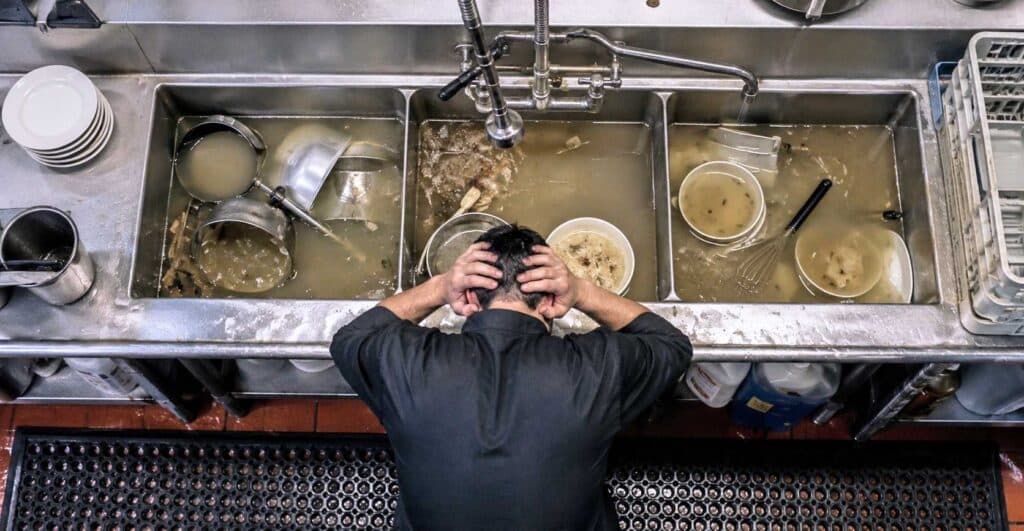
If a sewer line, drain line, grease line, or downstream pipe becomes clogged or overwhelmed, wastewater may stop flowing away from the kitchen. As the blockage continues, dirty water can start backing up through the drainage system and look for a place to escape.
That escape point could be a floor drain, a low fixture, a connected piece of equipment, or in the worst-case scenario, your three bay sink used for washing dishes and utensils.
When sewage backs up into a warewashing area, the kitchen is no longer dealing with a simple maintenance issue. It is dealing with a contamination risk.
Why a Sewer Backup Into a Three Bay Sink Is So Serious
Your three bay sink is one of the most important areas in your commercial kitchen. It’s where many kitchens wash, rinse, and sanitize pots, pans, utensils, cutting boards, containers, and other items that come into direct contact with food.
If contaminated wastewater reaches those sink compartments, it can affect more than the sink itself.
It can contaminate items waiting to be washed, items that were already cleaned, nearby drainboards, splash zones, floors, employee hands, and surrounding food-contact areas.
Even if the visible backup looks contained, the contamination area may be larger than it first appears.
This is why sewer backups in commercial kitchens have to be taken seriously. A backup can interrupt service, create cleanup costs, trigger health department concerns, damage a restaurant’s reputation, and put customers at risk if contaminated equipment or utensils are not handled properly.
The best approach is to reduce the chances of a backup happening in the first place while also making sure your plumbing setup helps protect your sinks if a downstream backup does ever occur.
Why Health Departments Care So Much About Air Gaps
Health departments pay close attention to plumbing connections because they are looking for possible contamination pathways. If a fixture or piece of equipment is directly connected to the sewer system without the right protection, there may be a route for dirty water to move backward into areas that should remain clean.
An air gap helps solve this problem by creating a physical separation between a fixture or drain outlet and the receiving drain. Instead of one continuous closed pathway, there is an open space that contaminated water cannot simply travel through in reverse.
An air gap removes the bridge between the sewer system and the sink or equipment you are trying to protect. That physical break is one of the reasons air gaps are so important in commercial kitchen plumbing.
Exact requirements can vary depending on your local health department, plumbing code, equipment, and installation setup.
Commercial kitchen operators should always work with qualified plumbing professionals and local inspectors when installing or modifying drainage equipment.
But the basic food safety principle is simple: you never want sewage to have a direct path back into the areas where dishes, utensils, and food-contact items are cleaned.
Backflow Prevention Starts With Preventing Backups In The First Place
Air gaps and proper plumbing design are essential, but commercial kitchens should also focus on what causes many drainage problems in the first place. One of the biggest contributors is food solids going down the drain day after day.
Small scraps may not seem like a problem in the moment. A little rice, pasta, vegetable debris, meat scraps, coffee grounds, or leftover food may look harmless as it disappears into the sink. But over time, those solids can collect in drain lines, combine with fats, oils, and grease, reduce pipe capacity, and contribute to clogs.
Once a clog forms downstream, wastewater has nowhere to go. The line slows, pressure builds, and dirty water may begin moving backward through the system. That is when a normal dishwashing station can quickly become a sanitation emergency.
The easiest clog to deal with is the one that never forms. And one of the best ways to reduce preventable drain problems is to capture food solids with a scrap collector system before they enter the plumbing system.
The Drain Strainer Protects Three Bay Sinks
The Drain Strainer was designed to help commercial kitchens manage food solids before they become a plumbing problem. Instead of allowing scraps and debris to travel deeper into the drain system, our scrap collector system captures solids in an easy-to-access strainer drawer.
This helps commercial kitchens take a more proactive approach to drain protection. By keeping more food debris out of the sewer line, kitchens can reduce the amount of solid material available to collect in pipes, combine with grease, and contribute to future backups.
But no preventative product can eliminate every possible plumbing problem. Sewer lines can still be affected by grease buildup, pipe damage, improper slope, aging plumbing, outside blockages, or other issues.
Removing food solids from your drainage stream is one of the most practical ways to reduce avoidable stress on the plumbing system.
The Drain Strainer gives your kitchen a dedicated scrap collector system for capturing solids before they move downstream.
The Drain Strainer Has a Built-In Air Gap by Design
Food-solid capture while still allowing your sinks to drain quickly is only one part of the story. The Drain Strainer also provides another important layer of protection through its built-in air gap design.
If a downstream sewer line ever backs up, the dirty water does not have a closed, continuous path back into the three bay sink. Instead, the backed-up water would spill out the front opening of the strainer drawer box before it could continue back up into the sink compartments.
A visible overflow from the strainer drawer box is far better than contaminated wastewater backing up into your three bay sink where dishes, utensils, and food-contact equipment are being washed.
A spill alerts the operator that there is a serious downstream plumbing issue that needs immediate attention. At the same time, the open design helps keep that backed-up sewer water from traveling into the three bay sinks themselves.
That combination is what makes The Drain Strainer so valuable. During normal operation, it captures food solids before they can contribute to clogs.
During a sewer backup, our built-in air gap design helps create a physical break between the sewer system and the three bay sink that your kitchen depends on for sanitation.
Train Your Staff to Protect the Drain System
A commercial kitchen’s plumbing system is only as strong as the daily habits of the people using it. Employees should understand that the three bay sink is not a trash can and that small scraps create larger problems over time.
Staff should be trained to scrape dishes properly, use The Drain Strainer correctly, empty the strainer drawer as needed, and report slow drains, unusual odors, gurgling, or water backing up from nearby fixtures.
This is especially important during rush periods when employees are moving quickly. It is easy for food solids to be pushed toward the drain when the dish area gets busy. Having the right equipment in place helps, but consistent employee habits make that equipment even more effective.
When your team understands why drain protection matters, they are more likely to treat it as part of food safety rather than just another cleaning task.
Watch for Early Warning Signs of a Drain Problem
Backups often give warning signs before they become full emergencies. Commercial kitchen operators should pay attention to changes in how their drains behave.
A sink that starts draining more slowly, a floor drain that bubbles when water is released, recurring odors near the dish area, or water appearing in unexpected places may all point to a developing problem.
Multiple fixtures draining slowly at the same time can be an even stronger sign that the issue may be farther downstream.
These warning signs should not be ignored. Don’t wait until it becomes a shutdown-level problem. Calling a qualified plumber early can help identify the issue before contaminated wastewater reaches a critical area.
What to Do If Sewage Backs Up in Your Kitchen
If sewage or contaminated wastewater backs up in a commercial kitchen, the first priority is to stop using the affected sinks and fixtures. Employees should keep food, clean utensils, dishes, pans, and food-contact equipment away from the contaminated area.
The kitchen should contact a qualified plumbing professional immediately and follow any applicable health department guidance.
Affected surfaces, equipment, and surrounding areas need to be cleaned and sanitized properly before normal operations resume.
This is not the time to simply rinse the sink and keep going. If wastewater has entered a warewashing area, the situation needs to be treated as a serious sanitation concern.
The best-case scenario is to have systems in place that reduce the likelihood of this happening at all. That means proper plumbing, good maintenance, employee training, grease management, and equipment designed to keep food solids out of the sewer.
Protect Three Bay Sink With Our Scrap Collector System
If you want to keep your three bay sinks from getting clogged with food solids, The Drain Strainer™ scrap collector system captures food debris that either can be disposed of or kept for composting.
The Drain Strainer™ helps you avoid issues with what gets put down your restaurant drains. No matter how much you focus on employee training, short cuts are always going to be taken and items are going to be put down your commercial disposal unit that can harm it.
If a utensil accidentally goes down The Drain Strainer™, it simply ends up in your strainer drawer and can be easily retrieved without any damage.
The Drain Strainer helps protect your plumbing from both directions. Our scrap collector system captures food solids before they can contribute to downstream clogs, and its built-in air gap design helps prevent backed-up sewer water from traveling back into the three bay sink.
If a downstream backup occurs, dirty water spills from the front of the strainer drawer box instead of continuing into the sinks used to wash dishes and utensils.
The Drain Strainer is a smarter way to protect your drains, support food safety, reduce preventable plumbing problems, and add another layer of defense between your sewer line and your dishwashing area.
To avoid issues with clogged grease traps or foodservice disposers that are leaking or have burned out motors, The Drain Strainer™ scrap collector system is an effective and affordable commercial kitchen waste disposal system alternative that doesn’t require the use of water or electricity.
Invented by a former restaurant owner, The Drain Strainer™ can eliminate issues with mangled silverware or dangers from employees putting their hands down the commercial waste disposal unit trying to clear out a clog.
Click here to find out more about how our foodservice disposer alternative can keep your grease trap free from clogs.
Let The Drain Strainer™ keep your three bay sinks running smoothly by capturing food solids and avoiding any problems with your restaurant drains.