

The Drain Strainer Helps Prevent Bad Publicity From Grease Trap Clogs
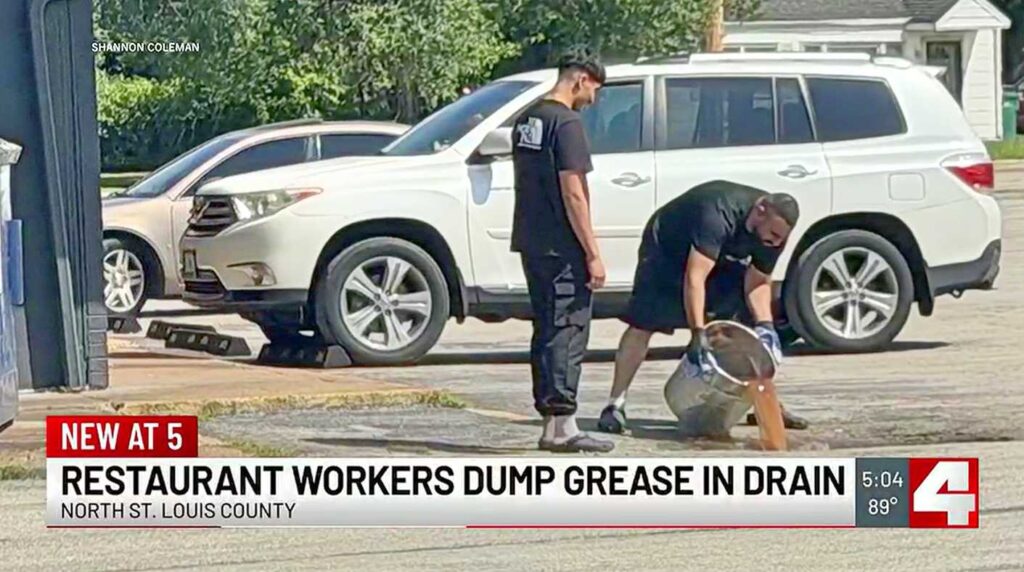
A recent television news story about an incident at a Missouri restaurant shows how quickly problems from grease trap clogs can escalate. When employees were caught on camera pouring grease into a storm drain, the restaurant faced citations, cleanup concerns and negative publicity that spread rapidly on social media.
- Grease should never be poured into a storm drain. Stormwater systems are designed to carry rainwater, not grease, food waste or other commercial kitchen waste.
- Grease trap clogs can create bigger problems. When grease traps are full or poorly maintained, your commercial kitchen can experience slow drains, backups, odors and other operational problems.
- Food solids can overload grease traps. Scraps that wash down your commercial kitchen sinks accumulate inside the grease trap, reducing its capacity and making it harder for the system to effectively separate fats, oils and grease.
- The Drain Strainer stops food solids at the source. By capturing food waste at the sink before it enters the plumbing, The Drain Strainer helps keep solids out of your grease trap so it can perform more effectively.
- Preventive maintenance helps protect your reputation. Proper grease trap maintenance, employee training, reliable waste-oil collection and food-solids separation can help prevent a kitchen problem from turning into citations, cleanup expenses and negative publicity.
A little prevention inside your commercial kitchen can help keep a manageable grease problem from becoming a much bigger operational and public relations issue. Let’s take a closer look at each of these main points in more detail.
Grease Trap Clog Becomes a Public Relations Problem for a Restaurant
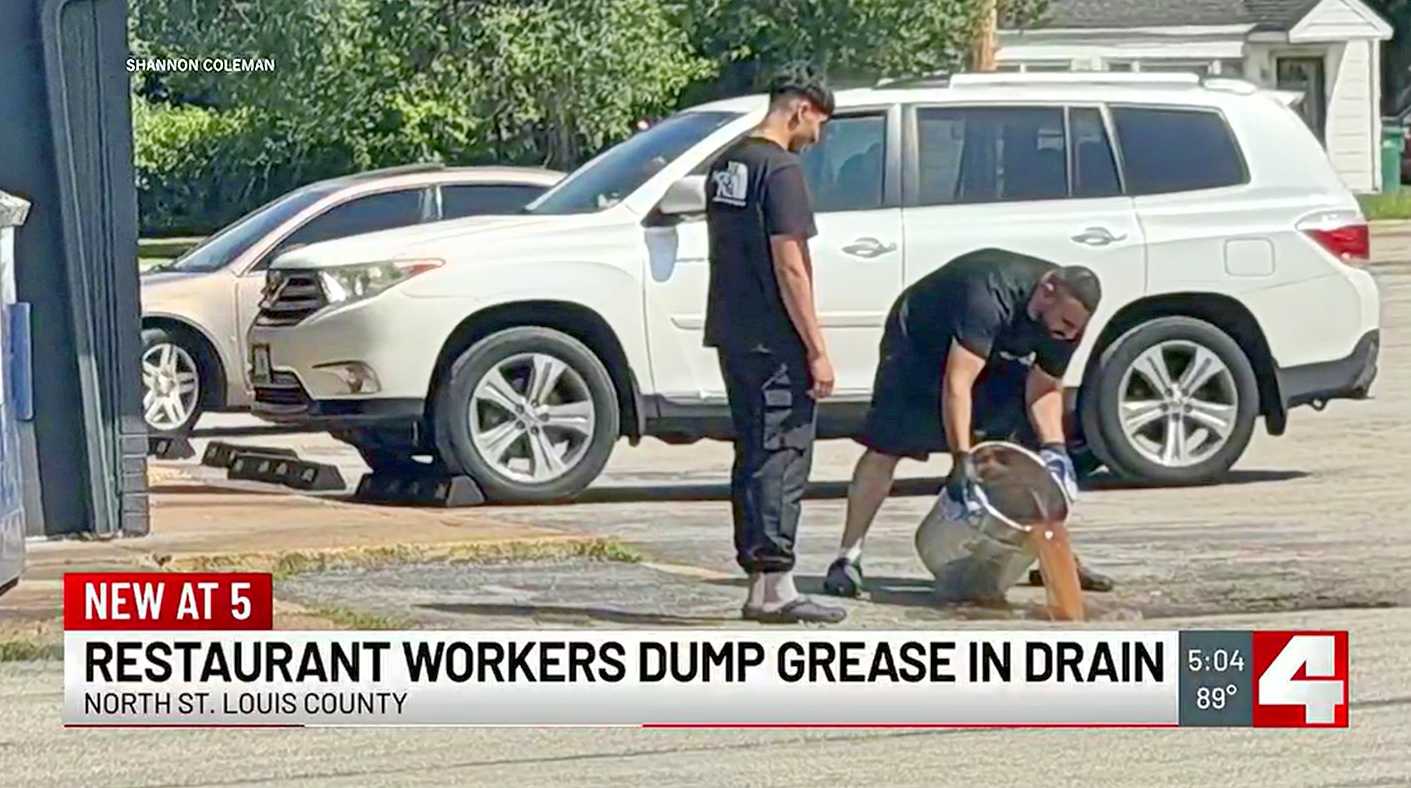
A television news story in Missouri provides an important warning for every commercial kitchen. When a restaurant had a grease trap clog, employees were caught on camera pouring grease into a stormwater drain behind the business.
The video was shared on social media, where it quickly attracted thousands of views. What may have seemed like a temporary solution to a grease disposal problem soon led to an investigation, citations, cleanup expenses and damaging publicity for the restaurant.
For restaurant owners and commercial kitchen managers, this incident is an important reminder that grease trap problems should be addressed long before employees feel forced to look for a quick way to dispose of waste.
Employees Caught Pouring Grease Into a Storm Drain
The video showed employees from the Missouri restaurant carrying a container of grease outside and pouring it into a nearby stormwater drain. After the footage appeared online, representatives from the regional sewer district visited the restaurant to investigate.
According to a sewer district project representative interviewed for the news story, investigators found evidence that grease had entered the stormwater system. The restaurant received notices of violation for illegally discharging waste into a storm drain and for failing to properly maintain its grease trap.
The restaurant’s manager acknowledged their employees had poured grease into the drain over a period of several days. He explained that the restaurant had a grease trap clog and their grease trap was full, but the company responsible for collecting the waste oil had not arrived as expected.
Those challenges may explain how the situation developed, but they did not make pouring grease into a storm drain acceptable. The restaurant ultimately had to bring in a professional drain service to inspect the area and help address the consequences.
Storm Drains Aren't Part of the Wastewater System
One of the most important points made in the television news report was that stormwater drains are not designed to accept grease, food waste, trash or wastewater from a commercial kitchen.
Storm drains collect rainwater from streets, parking lots and other outdoor surfaces. Depending on the system, that water may travel toward nearby creeks, streams, lakes or rivers without passing through the same treatment process used for sanitary wastewater.
When grease enters a stormwater system, it can coat pipes, trap debris and restrict the movement of water. Blocked or partially blocked storm drains may contribute to standing water, road ponding and localized flooding during heavy rain.
Commercial kitchens must have established procedures for handling grease and used cooking oil. Waste oil should be placed in approved containers and collected by a qualified service provider.
It should never be poured into a sink, floor drain, storm drain or other part of the plumbing system.
Grease Trap Clog Problems Begin In Your Dishroom
Although the employees’ actions received most of the public attention, the restaurant’s full and improperly maintained grease trap was also an important part of the story.
A grease trap is intended to separate fats, oils and grease from wastewater before they can travel farther into the plumbing and sewer system.
But grease traps frequently fill up with more than just grease. Food scraps, rice, vegetables, meat particles, sauces and other solids are often washed down commercial sinks along with dirty water.
Those food solids settle inside the grease trap and take up valuable capacity. As they accumulate, the trap has less room to separate fats, oils and grease effectively. This can contribute to grease trap clogs, odors, slow drainage, backups and more frequent service requirements.
Removing food solids before they enter your drains is one of the most effective ways to help your grease trap perform the way it's designed.
The Drain Strainer Helps Protect Your Grease Trap
The Drain Strainer is designed to capture food solids at the sink before they can enter your plumbing and accumulate inside the grease trap.
Instead of allowing scraps to wash down the drain, The Drain Strainer collects them in a removable strainer drawer. Employees can empty the captured food debris into the trash while wastewater continues through your commercial kitchen’s drainage system.
By keeping food solids out of your grease trap, The Drain Strainer helps preserve more of the grease trap’s working capacity for fats, oils and grease. A cleaner grease trap system can perform more effectively and may reduce the conditions that lead to slow drains, unpleasant odors and emergency backups.
Preventing Plumbing Problems From Becoming a Public Problem
Years ago, an employee might have been able to make a poor grease disposal decision without anyone outside the restaurant noticing. But today, nearly everyone carries a cell phone capable of recording and immediately sharing what they see.
In this case, the grease disposal problem became a widely viewed news story. The restaurant was not only faced with equipment issues and possible cleanup costs.
They also had to respond publicly after customers and members of the community watched their employees pour grease into a storm drain.
That kind of negative publicity can be difficult to overcome. Customers expect restaurants to handle food waste responsibly and follow regulations intended to protect public infrastructure and the environment.
The best way to prevent this type of negative publicity is before your grease trap becomes overloaded, before drains begin backing up and before employees are left trying to improvise the wrong solution.
Restaurant owners should maintain a dependable grease trap service schedule, monitor waste-oil storage, train employees on proper disposal procedures and address slow drains or equipment failures immediately.
Installing The Drain Strainer can strengthen that plan by reducing the amount of food waste entering their plumbing in the first place.
Give Your Grease Trap a Better Chance to Do Its Job
A full grease trap, delayed grease trap pumping service or a grease trap clog can place significant pressure on a busy restaurant. But pouring grease into a storm drain makes matters worse by turning an operational problem into a regulatory, environmental and public relations problem.
The Drain Strainer helps commercial kitchens take a more proactive approach. By capturing food solids before they reach your drains, it helps protect plumbing, improve grease trap performance and reduce the risk of disruptive problems that can damage your restaurant’s reputation.
Don't wait until your grease trap is overwhelmed or your commercial kitchen drains begin backing up. Visit The Drain Strainer to learn how our commercial food-waste separation system can help keep food solids out of your drains and help your grease management system operate more effectively.
By capturing food solids before they enter the plumbing system, it can help reduce grease trap clogs, improve grease trap performance, and lower the risk of problems that could attract attention from your local municipality.
If you want a smarter way to keep solids out of your plumbing and support the long-term health of your kitchen, The Drain Strainer is a practical solution worth adding to your operation.
To prevent problems in your commercial kitchen drains that can result from having a clogged grease trap, consider installing The Drain Strainer.
Invented by a former restaurant owner, The Drain Strainer is a commercial garbage disposal alternative that captures food solids that could clog your pipes and grease trap while still allowing your sinks to drain quickly.